
How the 8 Limbs of Yoga Can Be Your Guide to a Balanced Life
Yoga often conjures thoughts of only flexibility and physical poses. Yet, there’s so much more to it. It’s fundamentally about connecting with your true self, especially for Ashtanga Yoga, as it’s a way to improve one’s lifestyle.
This ancient practice offers a holistic approach to well-being that’s deeply rooted in philosophy. It’s based on an eightfold path that targets your body, mind, and soul. The purpose is to help you find a sense of balance and peace that’s often missing in our hectic modern lives.
What is Ashtanga Yoga?
It’s a structured form of yoga that’s all about synchronizing your breath with your movements. It’s a practice that involves a series of poses, but it also incorporates ethical principles, self-discipline, and elements of meditation.
Ashtanga has ancient origins, going back thousands of years. The term itself means “eight limbs” in Sanskrit.
This practice was first outlined in a text called the Yoga Sutras, penned by a sage named Patanjali. These are well-thought-out one of life’s guidelines that have stood the test of time.
The 8 Limbs of Yoga and Their Significance
These are like the building blocks of Ashtanga, each one offering its own set of guidelines for a balanced life.
● Yamas: Ethical Standards
Yamas are basically ethical standards or moral imperatives. These are the principles that guide how you interact with the world around you.
○ Ahimsa (Non-violence)
This one’s about kindness and compassion, not just toward others but also toward yourself. It’s the idea that harm isn’t the way to go.
○ Satya (Truthfulness)
Be honest, not just with others but also with yourself. Satya wants you to speak your truth and recognize the truth in others.
○ Asteya (Non-stealing)
This isn’t just about not taking someone’s stuff. It’s also about not taking someone’s time or energy without permission.
○ Brahmacharya (Moderation)
This one’s about not overdoing it, whether it’s eating, working, or exercising. You have to find a balance in all things.
○ Aparigraha (Non-attachment)
Do not cling to things, people, or outcomes. Aparigraha is the idea that holding on too tightly can actually cause more harm than good.
● Niyamas: Self-discipline
Think of these as the things you do when no one’s watching, the habits and routines that make you, well, you.
○ Saucha (Cleanliness)
Not just about keeping your space tidy, it’s also about mental and emotional cleanliness—keeping your thoughts and feelings in check.
○ Santosha (Contentment)
Being okay with what you have and where you are, that’s what Santosha is. It’s not about complacency but appreciating the good in your life.
○ Tapas (Discipline)
This is about the fire or passion you bring to your daily life. It’s what gets you up in the morning and keeps you going.
○ Svadhyaya (Self-study)
Reflect on yourself, your actions, and your life. Svadhyaya means learning from your experiences and growing as a person.
○ Ishvara Pranidhana (Surrender to a higher power)
Ishvara Pranidhana wants you to let go of the ego and acknowledge that there’s something bigger than yourself.
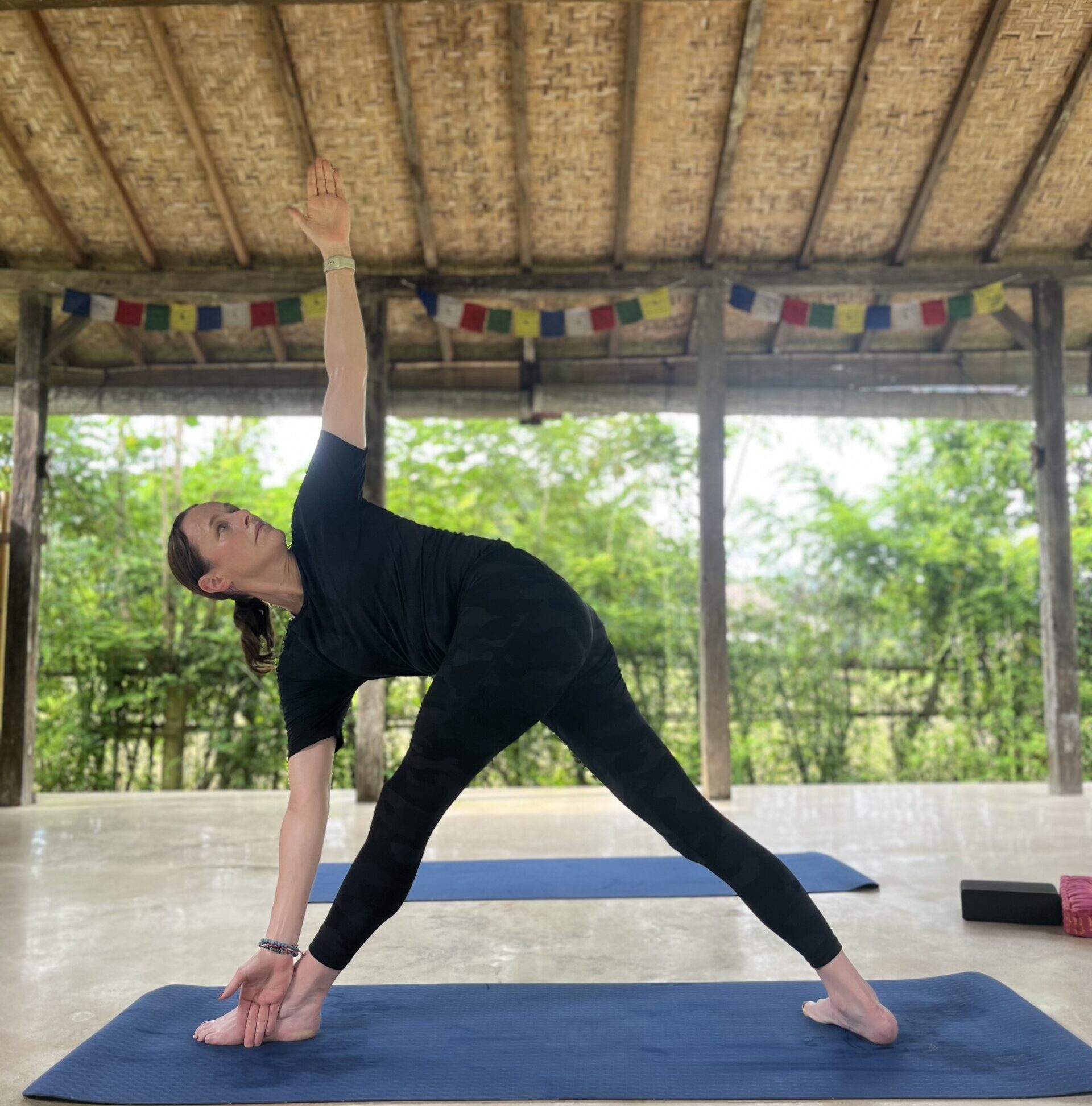
● Asana: Physical Postures
The Asanas are performed in a specific sequence, and each pose is designed to serve a particular purpose.
○ Forward Bends
These poses help to calm the mind and stretch the spine. They teach you to learn to focus inward.
○ Backbends
These are energizing poses that open up the chest and improve your posture. They help you breathe better and feel more alive.
○ Twists
Twist poses are all about detoxifying. They help to improve digestion and refresh your internal organs.
○ Balancing Poses
Balancing poses teach you to be present and concentrated, which are skills you can take off the mat and into your daily life.
● Pranayama: Breath Control
If you think about it, the way you breathe can say a lot about your state of mind. Short, shallow breaths usually mean you’re stressed, while deep, slow breaths are a sign of relaxation.
Pranayama aims to make you more aware of your breath so that you can use it as a tool for better health and well-being.
○ Ujjayi Breath
This is the most commonly used breathing technique. It’s a diaphragmatic breath, which means you breathe deep into your lungs.
The unique thing here is that you slightly constrict the back of your throat, creating a sound like the ocean when you breathe. This helps to focus your mind and generate heat in your body.
○ Nadi Shodhana
Also known as alternate nostril breathing, Nadi Shodhana is great for calming the mind and balancing out the two hemispheres of your brain.
You basically take turns breathing out of each nostril, which might sound weird but is incredibly calming.
○ Kapalabhati
Kapalabhati is a more advanced technique that involves short, forceful exhales and passive inhales. It’s great for clearing out your respiratory system and boosting your energy, but it’s not recommended for beginners.
● Pratyahara: Sense Withdrawal
Before you start thinking this is some sort of sensory deprivation thing, let’s clarify. Pratyahara teaches you to gain mastery over your senses so you can focus inward.
In today’s world, we’re constantly bombarded with stimuli—sounds, sights, smells, you name it. Pratyahara trains you to tune out the noise and tune into yourself.
○ Selective Attention
One aspect of Pratyahara is learning to choose what you pay attention to, like being able to focus solely on the conversation you’re having.
○ Inner Awareness
Instead of getting lost in external distractions, you learn to pay attention to your internal state—your thoughts, your feelings, your breath.
○ Mindfulness
This is a big one. Pratyahara helps you become more mindful of the present moment. You don’t ignore your senses but do not let them control you.
● Dharana: Concentration
This isn’t the kind of concentration you use to ace a test or finish a project at work, although it can certainly help with those things. Dharana is about sustained, focused attention, usually on a single point, like your breath.
○ Single-Pointed Focus
The key to Dharana is learning to focus on one thing and one thing only. This might sound simple, but it’s incredibly challenging, especially in a world filled with distractions.
○ Mental Stillness
When you practice Dharana, you’re aiming for a state of mental stillness. So, there’s no room for distractions.
○ Preparation for Meditation
Dharana is often seen as a stepping stone to deeper states of meditation. Once you can maintain your focus for extended periods, you’re ready to move on to Dhyana, which is the practice of sustained focus without effort.
○ Practical Applications
Beyond the mat, the skills you develop through Dharana can be incredibly useful. Whether it’s staying focused in a meeting or not losing your cool in a stressful situation, the ability to concentrate is a valuable life skill.
● Dhyana: Meditation
Dhyana takes meditation to another level because you can reach a state of focused awareness that’s free from distractions.
○ Sustained Focus
Unlike Dharana, where the focus is intense but requires effort, Dhyana is effortless focus. It’s like being in “the zone,” where you’re fully engaged but not straining to maintain it.
○ Heightened Awareness
You become more aware of your thoughts and feelings but without getting attached to them.
○ Inner Peace
One of the most significant benefits of Dhyana is a sense of inner peace and calm. You don’t escape reality but about facing it with a clear, focused mind.
● Samadhi: Enlightenment
Samadhi means reaching a state of ultimate consciousness where you’re at one with the universe. It’s a state of deep spiritual insight and peace.
○ Unity of Mind
In Samadhi, the sense of self dissolves, and what remains is a state of unity. You’re not focused on your ego or your individuality; you’re simply existing in a state of pure consciousness.
○ Transcendence
You transcend the limitations of the physical world and the mind, entering a state that’s hard to put into words because it’s beyond conceptual understanding.
○ Liberation
One of the ultimate goals of Samadhi is liberation or freedom from the cycle of birth and death, also known as Samsara in Hindu philosophy.
How to Practice and Apply Them in Your Life?
Start with small, manageable actions. Yamas and Niyamas serve as ethical guidelines; for example, choose kind words in a heated discussion or keep a gratitude journal.
Incorporate Asana through simple stretches during work breaks and use Pranayama breathing techniques to manage stress in traffic.
Employ Pratyahara by muting distractions when focusing on a task. Use idle moments for Dharana and Dhyana, like concentrating on your breath while waiting.
Curious about the Third Limb, Asana? Find Out More in OneFitWellness Bali’s Wellness Retreats
If Asana, the third limb of Ashtanga, has caught your interest, OneFitWellness Bali offers a focused and serene environment for your practice. Situated amid rice paddy fields, the Yoga Shala provides a quiet space for exploration and many other things.
● Range of Classes
The studio offers a diverse range of sessions, we’ve got something for everyone from Yoga for Beginners to Vinyasa Flow. The daily schedule is designed to accommodate various skill levels.
● Holistic Approach
Beyond just the physical postures, each class integrates breathing and mindfulness techniques, aiming for a well-rounded and holistic experience.
● Natural Setting
The studio’s location allows for a unique connection with nature, subtly enhancing the quality of your practice.
● Focus on Tranquility
The serene surroundings and expert guidance help you rediscover your inner peace, making each session more than just a physical workout but also deeply introspective.
If you’re looking to deepen your understanding and practice of Asana, OneFitWellness Bali provides a conducive environment for it. More than just a space for philosophy yoga, the studio lets you genuinely engage with the practice and find a measure of inner peace.

 This practice has been around for a long time. Originating from ancient India, it has its roots in ancient texts like the Bhagavad Gita, where it’s presented as one of the paths to spiritual enlightenment and personal growth.