
Rooted deeply in Bali’s vibrant culture

Ogoh-Ogoh: Unique Parade in Bali Before the Silence Day

Once a year, the island of Bali comes alive with a festive night of Ogoh-Ogoh parades. 

These colorful yet huge monster-like statues are brought through the streets with the gamelan music, fire torch, and cheers from the crowd.

But, the parade is more than just a fun festival. It represents negative energy that needs to be purified before the day of Nyepi. 

So, why Balinese people create such statues and how did this tradition start? Let’s dive right in to find out about the story behind this unique tradition!

What Exactly is an Ogoh-Ogoh?
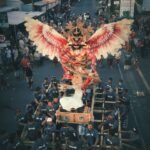
Some of you might wonder why the giant statues are being paraded through the streets of Bali and what its significance is.

Basically, the purpose of Ogoh-Ogoh Bali creation is a part of Balinese Silence Day celebrations. It is often depicted as demon creatures which represent evil and negative spirits. 

On the night before Nyepi or known as Pengrupukan, the statues are being paraded through the streets by Banjar or traditional Balinese community organizations. 

At the end of the parade, the statues are being burned symbolizing spiritual cleansing or removal of bad energy. It is a very sacred ritual for Hindus in Bali and over time, it has become an important cultural expression.

The Origins: History of Ogoh-Ogoh

There are numerous versions of the history about this tradition, but compared to other Balinese rituals, the parade of these giant statues is quite recent and only became popular in the 1980s.

Before that, Balinese Hindu already had rituals to beat off negative spirits, but did not include large monster-like statues. 

If history says so, then why there is Ogoh-Ogoh in Bali?

The idea of parading the statues only started as a creative way to represent the negative force of nature and universe or Bhuta Kala. 

Balinese people believed that creating such frightening figures, parading, and eventually burning them can remove bad energy before the sacred day of Nyepi. Over time, the tradition grew and now every Banjar in Bali is taking part in the making process. 

The statue’s name itself is derived from Balinese word “ogah-ogah” which implies something is shaken. This name is a reason why the statues are always being shaken when carried around the streets.

The statues movement is also influenced by its stance. As technology has advanced, many of the statues can now be moved with the help of modern and latest tools.

Interestingly, many of the figures are not only from Hindu mythology, but also use modern themes, including social issues and environmental concerns. 

Despite the adaptation, the meaning of the tradition will remain the same.

How Ogoh-Ogoh Bali is Made?

Now that you have known about the history, you might also be pondering about how these huge statues are made. 

It is basically a community effort that takes months of preparation. But, generally the process can be explained in a following simple step-by-step:

  • Making the Base Structure

After deciding on the theme and design, now is the time for making the base structure of the statues which is typically built using bamboo and wood. 

It needs to be carefully tied and shaped, creating a strong but lightweight figure for easy carrying during the parade procession. Additionally, the base must also be sturdy enough to make it flexible for movement.

  • Shaping the Body Construction

When the framework is ready, the body is then built and formed using certain materials, like paper mache and cloth that is soaked in glue.

After that, paper, cloth, and resin are used to build the body’s shape to give a lifelike appearance. This is a crucial step for creating facial expressions, detailed muscular structures and wings or tails.

  • Painting and Adding Details

In order to make the statues more colorful, they are decorated and painted in bright colors.

Details like dramatic facial features, claws, and fierce expressions are also added. Ornaments, patterns, and accessories are being applied to elevate the details of the statues. 

Some modern statues are decorated with LED lights to make it more striking visually. Moving gestures like opening mouths, blinking, and rotating heads are also included as special effects controlled by advanced tools.

  • Final Process

Once the statues have finished being decorated and enhanced with details, it will be placed on a bamboo grid. This is to make sure easy carrying and movement for the people during the parade.  

The Parade Procession of Ogoh-Ogoh

The parade starts and is held on the night before Nyepi (Pengrupukan Night). The giant statues are carried through the streets on bamboo platforms by each village community group.

They will parade the handcrafted statues by shaking and spinning to symbolize the battle against the negative spirits. 

This procession is followed by crowd chants, fire torches, gamelan music, and sometimes fireworks. It is totally creating a dramatic and lively atmosphere.

One of the beliefs behind Ogoh-Ogoh loud noises and movement is to remove the bad spirits and energy before the sacred ritual of Nyepi. The statues will be burned at the end of the parade and symbolize an act of purification.

As a final procession, the burning phase is marking the transition from chaos to silence. 

Can Tourists Watch the Parade?

Certainly! Tourists are welcome to watch the parade of these Balinese statues. You can also take photos and videos of the parade, but remember to respect local rules by following certain guidelines from the community.

As the streets can be too packed during the procession, it is better for you to arrive early for the best viewing spot. 

Popular and best spots to see the parade include Ubud, Denpasar, and Kuta. But, the event also takes place in all main towns and banjar across the island.

Come to See the Lively Parade and Enjoy the Peaceful Atmosphere of Nyepi Day!

Ogoh-Ogoh parade is a unique Balinese tradition that is more than just a cultural event. It is a part of spiritual tradition that washes away negativity. 

After the parade ends, the whole island of Bali will enter the tranquility moment of Nyepi Day. This is a wonderful opportunity to step away from the noise of everyday life.

Make this special occasion by retreating into 3 Days Rejuvenation in Nature and Immersive Experience. Enjoy and embrace the peaceful atmosphere of Bali like never before.

Experience The Silence: Spending Nyepi Day In Bali

Imagine being able to spend time in a peaceful stillness. Time seems to slow down and the noises of daily life pauses entirely.

This is what actually happens when you visit Bali during Nyepi Day. On this day, the island especially comes to a profound silence for reflection and rejuvenation.

Experiencing the silence in this Island of Gods offers a unique opportunity to learn and connect with the spirit and magic of Balinese culture. 

So, if you aim to travel there during the celebration, this handful guide is for you.

Balinese Silence Day: What it Means

Silence Day is a spiritual and sacred celebration marking the new beginning of Balinese New Year. Based on the Saka Calendar, this year’s celebration falls on March 29th, 2025. 

It is a day of complete silence and meditation, dedicated to spiritual cleansing, self-reflection, and preserving balance with nature. Unlike most New Year celebrations, it is characterized by a total shutdown of activities on the island. 

Delicate and lively rituals are held the day before, such as Ogoh-Ogoh which paraded through the streets. On the following day, Nyepi Day will start at sunrise or around 6 AM and will last for 24 hours.

During this time, everyone is encouraged to stay indoors and not to engage in loud or noisy activities. No artificial lights and entertainment are also permitted.

It is the best time that allows Balinese people and visitors to focus inwardly and purify themselves for the year ahead.

Why Balinese Celebrate Nyepi Day?

For the Balinese people, this special day holds religious and cultural importances. 

They highly respected the harmony between nature, humans, and gods. So, they seize this moment to briefly pause from daily activities to restore the balance. 

The silence is intended to help them redefine their connection to the natural and spiritual world, introspect on their acts and rebuild their core values.

Not merely for religious purposes, Balinese Silence Day is a noble cultural practice. Families and communities used this special occasion to gather and perform Hindu’s rituals and ceremonies.

While it is a time for individual introspection, it is also time for collective spirituality. The island unites as a whole in a shared moment of silence, where the entire region participates in the sacred rituals.

What You Need to Expect on Nyepi Day?

If you are visiting Bali on the Silence Day, you need to be aware that it is not merely a local holiday. It’s a holy spiritual occasion that highly influences the atmosphere of the entire island.

So, here’s what you can anticipate during the day:

  • Complete Silence Across the Island

Streets are empty and everything on the island is closed. It means that you will not be able to find any businesses, including shops or restaurants open for the day.

If you are used to the lively energy of Bali, this calm setting might be a little bit surprising. That’s why you need to prepare as the silence is not observed only for the locals, but also all tourists.

Tourists are expected to stay inside of their lodging and obey the whole Balinese Silence Day celebration’s rules.

  • Limited Services

Most services, including transportation, are also unavailable. 

But generally, hotels and resorts may remain open with limited services. Some resorts may offer special activities, such as yoga, meditation, and cultural experiences. 

This can be a great chance and ideal option for tourists to spend the day, allowing them to participate in the spiritual aspect.

  • Absence of Noise and Light

Staying during the Nyepi Day in the heart of Bali can be a truly unique experience with its quietest setting. Absence of light, noise, and crowds will give you a rare chance to experience the island without the usual bustle.

For those who are looking for a serene moment of break, this is a perfect choice to take.

  • Pecalang: Local Security on Silence Day

When you plan on staying in Bali for Silence Day, you should also be prepared for Pecalang. Pecalang are traditional officers who are tasked to maintain order and peace, particularly during the Silence Day. 

They are usually wearing a distinctive uniform with traditional headpiece, black and white sarong, and sometimes bring ceremonial tools. 

Pecalang ensures everyone stays indoors and obeys the rules by doing patrol across the streets. They will ensure that no one is going for travel, work, making crowds, and driving vehicles.

Tips for Travelers: How to Experience Nyepi in Bali

To make the most out of a wonderful yet respectful experience, the following tips may be useful for travellers and tourists during the Silence Day. 

  • Stock up Food and Water

As all shops and restaurants will be closed and you won’t be able to go outside, it is important to stock up and prepare your essentials the day before.

These essentials include food, water, and other necessities. It will be better if your accommodation has the arrangements or provided in place for all these supplies.

  • Prepare for Limited Connection

Aside from businesses that are all shutdowns, phone and internet connectivity can also be very limited. If this is a crucial thing for you, then ensure you have everything to make you stay connected before Nyepi Day starts.

But, if you don’t really have the urgency to stay connected, then this time is perfect for taking a break from the buzz of the digital world. You will be able to have more personal free time for self-reflection.

  • Respect Local Culture and Rules

Being mindful of the local culture and rules during this is an essential task. Tourists are expected to obey the rules as it is part of spiritual rituals.

Hotels and resorts you are staying in will likely give instruction on how to spend your day respectfully. They may encourage you to remain in the rooms or designated areas and avoid making noises.

Join Us In Embracing Wellness And Tranquility This Silence Day!

Spending Nyepi Day in Bali can be an unforgettable experience to witness the tradition and spiritual celebration. It’s more than just a day of completely engaging with silence, but it is the perfect time for reflection and getting rest from the exhausting worldly matters.

If you find this as an inviting choice, then take the chance to fully engage in this moment of tranquility. Embrace the peace with 3 Days Immersive Experience and 3 Days Rejuvenation in Nature during the Silence Day. 

It surely will be one of the most meaningful days in your life!   

Experience Balinese Culture
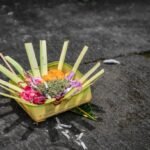
“Canang Sari”

(Traditional balinese offerings to Gods in Bali with flowers and aromatic sticks on stone at garden)

Often known as the Island of the Gods, Bali is a cultural treasure trove as much as a refuge for those looking for beaches and active nightlife. Among the many spiritual traditions that entwine Balinese life, Canang Sari is very important.

If you have visited this island, you have probably seen little, vibrant floral displays set on streets, in temples, or outside residences. In Balinese Hinduism, these exquisite presents are significant representations of thankfulness and loyalty, not just ornamental objects.

But just what is Canang Sari, and why is it so important for Balinese everyday life? From its history to its meaning, let’s explore the core of Canang Sari!

The History of Canang Sari, a Beauty of Balinese Cultural Heritage

Apart from the breathtaking scenery, Bali is mostly loved because of its rich traditions, which have great spiritual resonance through its culture.

One of the most recognizable practices here is Canang Sari. It is a small but valuable offering that is left in houses, temples, and the streets. This daily act is both a sign of loyalty and a beautiful reminder of how people, Gods, and nature all work together. Here’s the detail:

●       What is Canang Sari?

Balinese Hindus make an offering called Canang Sari every day to show their thanks to the Gods. The name comes from the Kawi language, where “Ca” means “beautiful,” “Nang” means “purpose,” and “Sari” means “essence.” As a beautiful statement of love and balance, these words sum up what the gift means.

A Canang Sari is made up of many parts, such as a small tray made from palm leaves, colorful flower pieces, rice, and incense. Each of these parts has a spiritual meaning that shows how they are all linked and in balance.

Some things, like the flowers, are set up in a certain way to honor different Hindu Gods, like Iswara, Brahma, Mahadeva, and Vishnu.

●       Why Do Balinese People Offer Canang Sari?

Learning Canang Sari won’t be complete without exploring its history. Balinese Hindu philosophy, which stresses balance and thanks, is where the practice of giving Canang Sari comes from.

For the Balinese, life is a constant battle between good and evil, happiness and sadness. This gift helps keep the balance.

Balinese people thank the Gods for blessing them with wealth and health by giving Canang Sari. They also try to appease evil spirits to keep peace. Because of this, this is a great way to help our personal growth.

Even until today, this daily practice is still a big part of Balinese faith and culture. Women traditionally take on the responsibility of preparing the offerings, a process known as “metanding”.

What are the Elements of Canang Sari?


If you want to learn something new, making a Canang Sari can be a memorable activity you might try when you visit this Island of Gods.

From designing the palm-leaf trays to arranging the flowers and sprinkling holy water over the finished gifts, this work calls for great attention to detail. Although some people today buy pre-made Canang Sari, the act of preparing it from scratch is still a cherished ritual.

But in general, everyone can make Canang Sari as long as we know the elements, which consist of:

●       Ceper

The Ceper serves as the base of a Canang Sari. It is made from young palm leaves and shaped into a rectangular tray.

It stands for the Panca Maha Bhuta (the five universal elements) and the Panca Indriya (the five senses), therefore reflecting the physical body. Without this basis, the offering would not be whole, just as the body is the vehicle for life.

●       Porosan

Atop the Ceper you will discover the Porosan, a concoction of betel leaves, lime, and resinous material called gambir.

Porosan reflects the Hindu trinity of Brahma (the creator), Vishnu (the preserver), and Shiva (the destroyer). Encouragement of balance in everyday life and personal growth, it also represents unity in thoughts, words, and deeds.

●       Rice

Rice, known as Wija, is an integral part of Canang Sari. It symbolizes the Ātma, or soul, representing the life force that animates the body. This element reminds us that life is a gift from Ida Sang Hyang Widhi Wasa, the Supreme God.

●       Flower Petals

Flowers are the most eye-catching component of Canang Sari, but their arrangement is not random. Each color represents a specific God and direction, which symbolizes harmony, peace, and sincerity in devotion. As mentioned before, here are the deities:

  • White (East) for Iswara;
  • Red (South) for Brahma;
  • Yellow (West) for Mahadeva;
  • Blue or Green (North) for Vishnu.

●       Kembang Rampai

This is placed on top of the flower arrangement and symbolizes wisdom. Some flowers are fragrant, while others are not—reminding us that life can be both joyful and challenging.

●       Snacks, Sugarcane, and Banana

These items represent the Tedong Ongkara, which symbolizes creation (Upetti), preservation (Stiti), and destruction (Pralinan). All are the forces that maintain balance in the universe.

●       Sampian Uras

The Sampian Uras, or duras, is crafted from palm fronds arranged in a circular shape. It has eight segments that symbolize the wheel of life and the Asta Iswarya (eight characteristics) that guide human life.

●       Lepa

Lepa, or boreh miyik, stands for good behavior and devotion. It reflects how our actions define how others see us and our connection to Ida Sang Hyang Widhi Wasa.

●       Fragrant Oil

Lastly, fragrant oil is added to the offering to stand for self-control and peace of mind. The smell also makes the spiritual environment better, which helps people concentrate during prayers.

The Beautiful Meaning of Canang Sari

Through Canang Sari, the Balinese demonstrate their belief in the interconnectedness of all things. As you can see above, each element represents its own meaning, and learning them can help you to get a deeper reflection on gratitude and harmony. It’s a practice of mindfulness, gratitude, and devotion.

For non-Balinese, participating in this tradition provides a glimpse into the depth of Balinese spirituality. It’s an opportunity to reflect on your own personal growth, embracing the values of gratitude and balance that Canang Sari embodies.

Let’s Explore Something New with One Fit Wellness!

At One Fit Wellness, we offer tailored wellness retreat packages that combine Balinese culture like Canang Sari with learning wellness activities like yoga, meditation, and fitness. Here are the packages you can choose:

Ready to experience the essence of Bali? Explore our retreats at One Fit Wellness and begin your journey with something new now!

Dive Deep into the Beauty of Bali Culture

Dive Deep into the Beauty of Bali Culture

Bali, often referred to as the “Island of the Gods” or “Dewata Island”, is renowned for its stunning landscapes, from majestic mountains to serene beaches and tranquil lakes. However, what truly sets this island apart is its rich Bali culture.

One of the most enchanting aspects of Balinese heritage is its traditional ceremonies, which are not only spiritually significant but also visually spectacular. If you visit Bali, you have the unique opportunity to witness these ceremonies.

Traveling to Bali? Check Out These 7 Balinese Traditional Ceremonies!

Balinese traditional ceremonies are a window into the island’s soul, showcasing its devotion to preserving cultural practices. Here are seven unique ceremonies that you shouldn’t miss during your visit:

1.     Ngaben Ceremony

Known as the cremation ceremony, Ngaben is a pivotal event for the Hindu Balinese, serving as a way to liberate the soul of the deceased from worldly attachments. The ceremony symbolizes the purification and release of the spirit to return to the Creator.

Typically, Ngaben ceremonies are visually stunning and culturally rich, drawing both locals and tourists alike.

This ceremony is divided into three types: Ngaben Sawa Wedana, Ngaben Asti Wedana, and Swasta. First, Ngaben Sawa Wedana is performed when the body is preserved until the cremation day.

Ngaben Asti Wedana is conducted after the body has been buried and later exhumed for the ceremony. Meanwhile, Swasta is reserved for those who died outside of Bali or whose bodies were never recovered.

The process involves constructing an elaborate cremation tower, intricate offerings, and traditional music and dance. The entire community often participates, highlighting the communal nature of Balinese society.

source ( Wikimedia )


2.     Melasti Ceremony

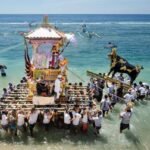
The next list of 7 Balinese traditional ceremonies in this article is Melasti. It is a vital purification ritual in the Balinese Hindu tradition, performed annually as part of the Nyepi festival preparations.

Taking place three to four days before Nyepi, Melasti aims to cleanse the universe of impurities and to purify sacred objects used in temple rituals.

This ceremony is a vibrant and colorful event, often involving entire villages marching to the sea or other water sources, which are considered sacred in Hindu beliefs.

During Melasti, participants dress in traditional white clothing, symbolizing purity, and carry various temple artifacts to the water. The procession is a spectacular sight, with umbrellas, flags, and the sound of gamelan music accompanying the journey.

At the water’s edge, rituals include the symbolic washing of the artifacts and the participants themselves, purifying them both physically and spiritually. The water used, believed to be a source of life, is thought to eliminate negative energies.

Source (Wikimedia)


3.     Mekare-Kare Ceremony

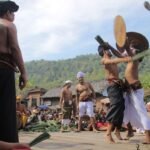
The Mekare-Kare ceremony, also known as the Perang Pandan or Pandan Leaf War, is a unique and thrilling ritual held in the traditional village of Tenganan, East Bali.

This ceremony is dedicated to the Hindu god of war, Indra, and showcases the martial skills and bravery of the village men. The event is not just a physical contest but also a demonstration of spiritual strength and community solidarity.

In Mekare-Kare, male participants engage in mock battles using thorny pandan leaves as weapons and woven rattan shields. Dressed in traditional attire, they face off in a designated arena, surrounded by the cheering villagers.

The goal is not to inflict serious harm but to display courage and honor. After the battles, which are often fierce and result in superficial wounds, participants receive traditional herbal treatments, and prayers are offered for their well-being.

Source (Wikimedia)


4.     Saraswati Day

Saraswati Day is a significant religious festival in Bali, dedicated to honoring Saraswati, the Hindu goddess of knowledge and learning. In Bali, this day is devoted to appreciating and venerating knowledge.

On Saraswati Day, books and other educational tools are brought to temples to be blessed. The day starts early in the morning, with offerings and prayers conducted in schools, homes, and places of learning.

Source (Wikimedia)


5.     Galungan Day

Galungan is one of the most significant religious ceremonies in Bali, celebrated every 210 days in Balinese calendar and lasting for ten days. The name ’Galungan’ originates from the Old Javanese language and means ’Victory’.

True to its name, this Balinese traditional ceremony aims to celebrate the triumph over evil. Additionally, the Galungan ceremony is held to commemorate the creation of the universe and all its contents.

Source (Wikimedia)


6.     Mepandes Ceremony

The Mepandes Ceremony, also known as the tooth-filing ceremony, is a rite of passage for Balinese Hindu teenagers, marking their transition into adulthood.

This ceremony is highly symbolic and is performed to eliminate negative traits like anger, greed, and jealousy. Typically, it is carried out when a child reaches puberty, and it involves the ritual filing of the upper canine teeth.

In the Mepandes ceremony, six upper canine teeth of the children who are coming of age are filed down. Also, the teenager undergoing the ritual is dressed in traditional Balinese attire.

Source (Wikimedia)


7.     Tumpek Landep Ceremony

This is a unique and fascinating Balinese ceremony dedicated to honoring weapons and metal tools. Celebrated every 210 days on Saniscara Kliwon Wuku Landep, Tumpek Landep involves offerings and prayers to ensure these objects are blessed.

Originally, Tumpek Landep was focused on traditional weapons, but in modern times, it has extended to include all metal objects, such as cars, motorcycles, and modern weapons like guns and knives.

Source (Wikimedia)

Explore the Beauty of Bali with Wellness Retreats

While immersing yourself in Balinese culture, consider enhancing your experience with a wellness retreat. Bali is renowned for its holistic health and wellness offerings, providing the perfect environment for relaxation, rejuvenation, and spiritual growth.

Our Wellness Retreats at One Fit Wellness Bali include yoga sessions, meditation practices, spa treatments, and healthy, organic meals, all designed to restore balance and harmony to your mind, body, and soul.

We offer a range of retreat packages tailored to meet your needs. Whether you’re seeking a transformative spiritual journey or simply a peaceful escape from the hustle and bustle of everyday life, our retreats provide the perfect setting for personal growth and self-discovery.

So, join us now to experience the magic of Bali while nurturing your well-being. Also, don’t forget to check out the Balinese calendar before planning your trip. Make sure you don’t miss all the ceremonies mentioned above!


Wellness Tools Selection

Gentle companions to your journey—always explorations, never medical advice.

These tools are designed for curiosity and reflection,offering simple ways to pause,notice, and reconnect. They are not diagnostic or therapeutic tools.

4-7-8 Breathing

A powerful, simple breathing technique renowned for its ability to quickly calm the nervous system. Master the 4-7-8 count to reduce anxiety, combat stress, and prepare your body for a deep, restful sleep.

Box Breathing

Also known as square breathing, this technique is a cornerstone of mindfulness for achieving balance and focus. Its simple four-step rhythm helps regulate breath, reduce anxiety, and sharpen mental clarity.

Alternate Nostril Breathing

A traditional yogic practice to harmonize the body's energy channels. Alternate Nostril Breathing is excellent for reducing stress, calming the mind, and balancing the left and right hemispheres of the brain for improved focus.

Diaphragmatic Breathing

Learn to breathe from your belly with this foundational technique. Diaphragmatic breathing strengthens the diaphragm, significantly reduces stress, and improves oxygen exchange for better lung health and relaxation.

Lion’s Breath

A cathartic practice that powerfully releases facial and chest tension. Lion's Breath is an excellent way to relieve stress, shake off inhibitions, and experience an immediate sense of calm and energetic release.

Panic Attack

A cathartic practice that powerfully releases facial and chest tension. Lion's Breath is an excellent way to relieve stress, shake off inhibitions, and experience an immediate sense of calm and energetic release.

Preparing your breathing exercise...

Enquiry