Sample Page

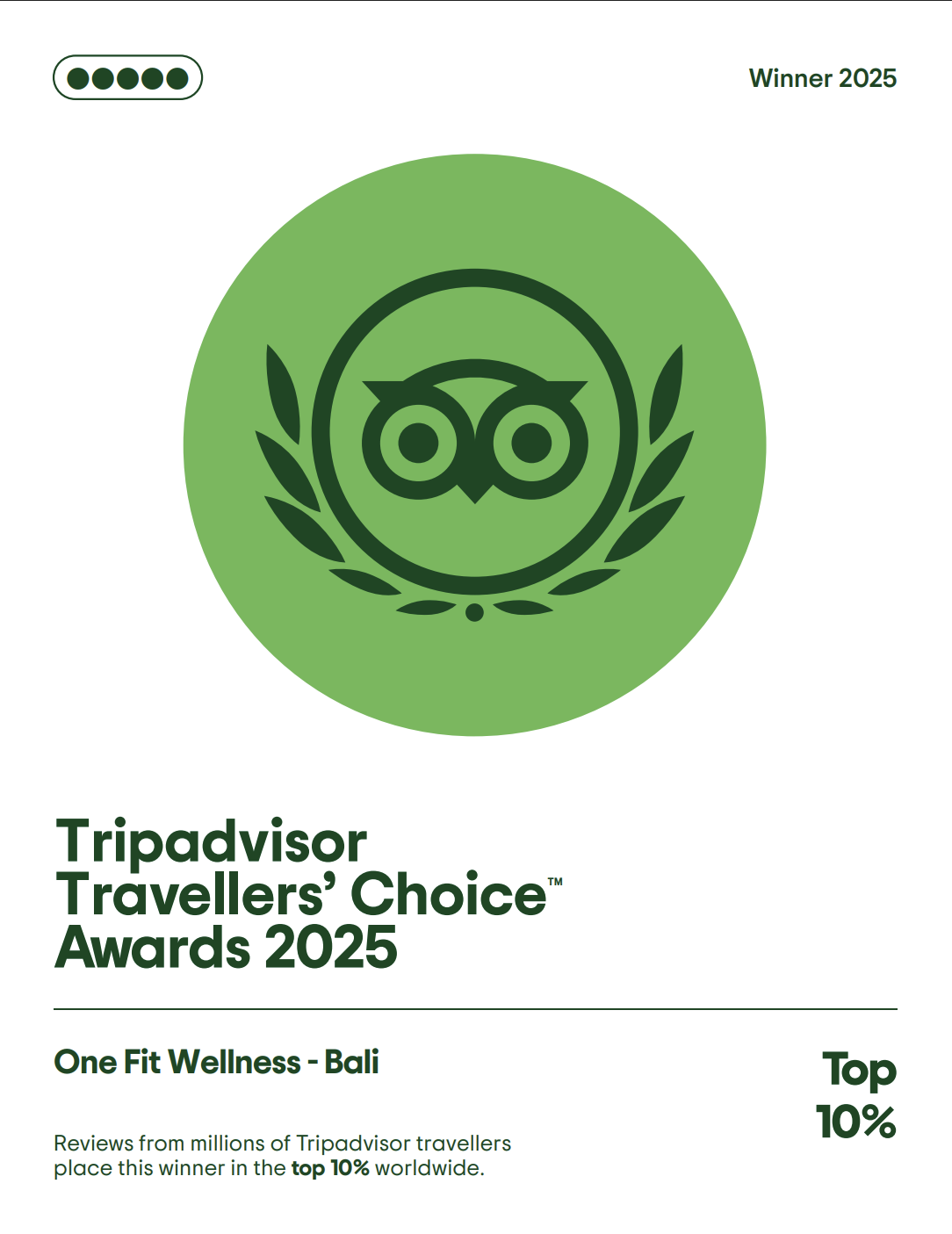
Celebrating Back-to-Back Wins: TripAdvisor Travelers’ Choice Award 2025

One Fit Wellness Bali Wins

Tripadvisor Travelers’ Choice 2025

Dear Valued Participants,

We are thrilled to announce that One Fit Wellness Bali has once again been awarded the Tripadvisor Travelers’ Choice 2025! 🌿✨

Earning this recognition for the second consecutive year is a true honor and reflects our commitment to providing one of the best wellness escapes in Bali. But above all, it is a celebration of YOU—our guests, whose trust, support, and feedback make everything possible.

A Celebration of Community and Wellness

The Travelers’ Choice Award is given to only the top 10% of hospitality businesses worldwide, based on guest reviews. Receiving it two years in a row shows the strength of our community and the dedication of our team to deliver unforgettable fitness and culture  in Bali.

Your stories, kind words, and experiences inspire us every day. Whether joining us for a rejuvenating holiday, a transformational wellness journey, or even a honeymoon escape in Bali, you are the heart of our success.

What the Tripadvisor Award Means to Us

This recognition motivates us to keep raising the bar—enhancing our wellness programs, curating cultural experiences unique to Bali, and providing the personal care that makes One Fit Wellness stand apart.

We’re proud to be recognized as an award-winning wellness holiday in Bali, but the true reward is seeing our participants leave refreshed, energized, and deeply connected to themselves and this beautiful island.

Looking Ahead: Wellness Journeys in 2025

As we move forward, our mission remains the same: to offer a sanctuary where fitness, mindfulness, and Balinese culture meet. In 2025, we’re excited to introduce new offerings that will make every visit even more memorable.

Thank You to Our Valued Participants

From the bottom of our hearts, thank you for making this back-to-back achievement possible. Winning the Tripadvisor Travelers’ Choice 2025 is an honor we share with you, our global community of wellness seekers.

We can’t wait to welcome you back soon for another transformative journey with us here in Bali. 🌸

With gratitude,
Agie J
Founder
One Fit Wellness – Bali


Ultimate Guide for Mind-Reset and Wellness Escape in Bali

Feeling exhausted and in need of a break? 

A wellness escape in Bali can be a way out to experience a true mind-reset and relaxation. But while this sounds so fun and stress-free, planning for a holiday can be overwhelming. 

With so many options from yoga, spa treatments, mindful meditation, and exploring Bali’s vibrant culture, organizing a healing trip should not be complicated. 

This guide will help you design the perfect plan and lets you relax without overplanning, so all you have to do is only focus on your well being. 

Let’s start!

Why Choose Wellness Escape in Bali?

Bali’s outstanding characteristic of breathtaking landscape, spiritual customs, and traditional wellness practice, makes it a perfect option for detox and mind-reset experience.

Surrounded by serene beaches, stunning rice fields, and scenic mountain views, Bali gives tranquil settings for relaxation. 

This island of thousand temples also offers plenty of excellent retreats, from luxury to eco-retreats that serve different individual preferences. 

Many of them include a complete wellness experience like yoga, spa treatments, meditation, detox programs, and more active fitness options.

It also became a home of wellness practitioners who use traditional techniques that bring profound healing opportunities. 

With all of this unique mix, wellness escape in Bali provides everything you need for a complete mind-body recharged.

Finding the Ideal Wellness Trip Experience

Finding the ideal and perfect wellness trip can guarantee a fulfilling experience. So, to ensure that you will get the best trip and retreats, you need to consider the following parts:

  • Understanding Your Wellness Purposes

Before you start booking for a wellness retreat, try to identify what your goals are that you want to achieve. Whether stress relief, fitness or physical health, mindfulness, or spiritual healing, find purposes that meet you where you are.

  • Group vs Solo Retreats

Planning a wellness escape in Bali also requires consideration whether you will go solo or with a group. 

Solo retreats allow you to create your own schedule and focus on yourself more. This is ideal for those who want more flexibility, self-reflection, and privacy. 

But, group retreats are a way more ideal for those who enjoy the company of others and connecting with individuals who share the same preferences. 

  • Fully Structured vs Flexible Retreats

Some wellness retreats offer structured programs, while others give participants more chances to explore at their own pace. 

For fully structured retreats, it usually provides daily schedules and planned activities. On the other hand, semi-structures retreats allow for freedom but still offer daily wellness schedules. 

How to Organize Your Wellness Escape Trip

Preparing for a wellness trip to Bali won’t be complicated if you are using the right approach. For more simple yet trouble-free planning, let’s dive into this ultimate guide!

  • Pick Your Favourite Wellness Experience

For the first step, it is important to consider what kind of wellness experiences that you favored. It may depend on your personal preferences and goals like what we’ve discussed shortly above. 

If you seek a peaceful setting with the sound of ocean waves and love to feel the soft sand under your feet, then a beachfront wellness retreat is the best choice. 

With this type of retreat, you can enjoy yoga by the beach, fresh seafood cuisine, and let the gentle sea breeze soothe your body and mind from stress.

For deeper spiritual experience, jungle retreats are basically a more perfect option. It offers daily meditation, organic plant-based meals, and a nature-minded environment.

But, if you are more inclined to spend on a high-end wellness escape, luxury retreats must be the one that you are looking for. 

These kinds of retreats generally provide detox plans, spa therapy, and holistic treatments for healing with first-class settings.

  • Must-Try Wellness Experiences

Whether you long for beachfront tranquility, jungle escape treats, or luxury detox, Bali always has something to offer for you. 

Likewise, if you want more than the three alternatives recommended above, One Fit Wellness has a perfect mix of wellness, movement, and exploration. It is a fitness-filled adventure that will nourish your body, mind, and soul.

Here are some must-try wellness activities that One Fit Wellness provides for you to feel energized and refreshed.

    1. Daily morning exercise – Energizing workouts that help you feel strong and ready for new challenges and adventures.
    2. Inspiring day trips and outdoor activities – Activities that keep you moving while enjoying the magnificent and wonderful Bali’s scenery.
    3. Organic and Healthy meals program – Fresh and organic meals like smoothie bowls, juices, and nutritious meals to keep you inspired and healthy.
    4. Vibrant Cultural experiences – Take the chance to engage with Bali’s dynamic traditions while striving for your own personal growth and development.
    5. Mind-Body reset – The whole wellness activities will leave you feeling stronger, rejuvenated, and ready to embrace a healthier lifestyle. 
  • Book Your Stress-Free Wellness Retreat 

After all, planning a wellness escape in Bali shouldn’t be a burden, but rather should be relaxing experiences. 

Instead of worrying about organizing schedules, determining where to stay, and what to do, let a top-tier and well-curated retreat take care of everything you need.

One Fit Wellness offers an all-inclusive package and well-structured wellness experience ranging from 3 to 7 days with flexibility of a resort stay. 

Unlike most traditional retreats, we are running for 24/7, 365 days a year, allowing you to start whenever it suits you, either solo or with groups. This chance gives you more than space to fully immerse in relaxation and worry-free.

Acknowledging that each individual’s need for wellness is unique, we offer customizable retreats, allowing you to choose the opportunity to enjoy healthy meals, join yoga, mindfulness sessions, or explore Bali’s culture and nature at your own convenience.

We really favor the value of balancing structured wellness with personal freedom, ensuring guests recharge and relax while exploring the beauty of Balinese culture.

Escape the Ordinary and Dive into Wellness Adventure!

Taking a break from your packed daily life is not just luxury, it is a form of investment for your well-being. Wellness escape in Bali will give you the privilege to unwind and immerse yourself in a mind-body reset experience tailored to your needs.

So, ready to start your own wellness trip to Bali? Let One Fit Wellness give you the perfect retreat within a comfortable setting. Book now and enjoy every peaceful moment of rest.

Plan Your Perfect Bali Vacation Now After Know the Indonesian Words!

Planning to visit Bali? To truly experience Bali’s magic, knowing a bit of the local language can make all the difference. While many Balinese people speak English, adding learn Balinese and Indonesian in a simple ways to your pre-travel checklist is a must-try.

Learning a local language might help you connect more intimately with the culture and cope with daily difficulties. Language difficulties might be scary, but do not fear. Read this guide to prepare yourself!

A Quick Overview of Language Used in Bali

When you visit Bali, you’ll find a unique blend of languages that reflect Bali’s rich heritage and modernity. Bali is a multilingual island, where three main languages dominate daily life: Bahasa Indonesia, Balinese (Basa Bali), and English.

Bahasa Indonesia is the official language of Indonesia and is used throughout the country, including Bali. It’s the language of education, government, and formal settings. Travelers may learn Indonesian easily since it employs the Latin alphabet and simple grammar.

Meanwhile, the Balinese language is a traditional language. Locals speak it regularly and use it in religious rites. Balinese has a complicated structure with three speech levels—low, medium, and high—depending on caste and social situation, unlike Indonesian.

Why You Need to Learn the Local Language?

While English is frequently spoken in tourist areas, learning the native languages can enhance your trip and help you connect with the island.

First, trying easy ways to overcome language barriers in Bali shows respect for the locals. Locals appreciate the effort, and embracing their culture will improve your trip.

Knowing basic words makes ordering meals, asking for directions, and shopping in local markets easier. Most importantly,  mastering the local language lets you experience Bali’s rich cultural tapestry in rural regions, where English is less common.

Tips and Tricks: How to Learn Balinese and Indonesian in a Simple Ways

Now, let’s explore some tips and tricks to learn local languages in Bali effortlessly and make your travel more memorable:

1.     Start with Greetings

Greeting people at the start of a talk makes a good first impression and sets a polite tone. So, greetings are the first step in being polite and nice.

Saying hello in their language shows that you care about their culture and are willing to work at it, whether you’re meeting people in a market, a restaurant, or a ceremony. A small action can make a big difference.

Many people use and like the words “Selamat pagi” (Good morning) and “Selamat sore” (Good evening) in Indonesian. Balinese people also say “Om Swastiastu” to meet each other, which is a traditional way to say “hello” and send benefits.

2.     Remember Polite Phrases

Please keep in mind that being polite is very important in both Indonesian and Balinese cultures. Thank-you words like “Terima kasih” and “Suksma” (thank you in Balinese) can mean a lot. You need to know how to say “Maaf” (Sorry) if you need to say sorry or explain yourself.

These nice words will not only make your conversations go more smoothly, but they will also show that you understand other cultures. For example, adding “Tolong” (Please) to your request for help or directions makes it sound nicer and more polite.

3.     Practice Common Questions

Common inquiries in Bahasa Indonesia might be very helpful when you are traveling around Bali. Asking “Toilet di mana?” (Where is the toilet?) or “Berapa harganya?” for instance (How much is the price?) will enable you to easily negotiate everyday contacts.

Particularly in less traveled-through Balinese places, queries like “Tiang rarisang?” (might you assist me?) might be life savers. Practicing these lines ahead of time can help your vacation be much more fun and hassle-free.

4.     Try with Locals

The best way to learn any language is by speaking it with native speakers. Balinese locals are generally friendly and encouraging when visitors attempt their language. So, don’t be afraid to try phrases like “Apa kabar?” (How are you?) in Indonesian or “Rahajeng semeng” (Good morning) in Balinese.

5.     Join a Workshop

For a deeper understanding to learn Balinese and Indonesian in a simple ways, consider joining a language workshop.

Many cultural centers and local communities in Bali offer short courses that cover both languages for tourists. So, you may meet other travelers who share the same interest in Bali’s culture and language.

Easy Ways to Overcome Language Barriers in Bali!

If you still find the local languages difficult to learn, there are some simple yet effective ways to bridge the gap and enjoy your Bali adventure to the fullest, such as:

1.     Body Language

When words fail, your body can speak for you. Hand gestures, facial expressions, and pointing are universal ways to communicate. For instance, when ordering meals or getting instructions, pointing to a menu or map might assist.

Balinese locals are generally very understanding and friendly, so don’t hesitate to use gestures to clarify your needs. A smile goes a long way too—it shows friendliness and breaks down communication barriers instantly.

2.     Write it Down

Sometimes, writing things down is more effective than speaking. If you’re struggling with pronunciation, jot down the name of your destination, food, or any specific item you’re looking for.

Showing the written word to a local can save you from confusion, especially in busy areas like markets or taxi stands. Having a small notebook or using your phone’s notes app can be a lifesaver during your trip.

3.     Use Translation Apps

These days, your greatest travel buddy is often technology. For getting around language barriers, apps like Google Translate are very helpful.

These tools are especially useful for understanding signs, menus, or complex conversations. Just keep in mind to download the required language packs offline before visiting distant locations with perhaps restricted internet connection.

4.     Hire a Local Guide

To make things go more smoothly, you might want to hire a local guide to help with translation and give you information about Balinese culture, traditions, and secret gems. They can help you find your way around shops, order food, and even haggle over prices.

Plus, having a guide makes your trip feel more like you. If you want to connect with locals more deeply, they can teach you simple words in Balinese or Indonesian.

Now that you know easy ways to overcome language barriers in Bali, it’s time to plan your trip here. Also, don’t forget to take your adventure to the next level by booking a Wellness Retreat with us at One Fit Wellness!

How to Meditate? Meditation for Beginner

Are you ready to embark on a journey of self-discovery and personal growth? Perhaps you’ve heard about the wonders of meditation and how it can transform your world, but you’re not sure where to begin.

Fear not, because in this guide, we’ll explore the ins and outs of meditation for beginners, offering you practical tips and techniques to kickstart your journey toward inner peace and wellness.

Everyone Can do Meditation, Here’s How

Meditation is not reserved for spiritual gurus or yogis perched atop misty mountaintops. Don’t worry, it is never too late to start meditating. It’s a practice that anyone can embrace, regardless of age, background, or experience.

So, how exactly do you meditate? Let’s break it down into simple steps that even the most novice practitioner can follow:

1.     Set Aside Some Time

When beginning your meditation journey, it’s crucial to build small habits by carving out dedicated time for your practice.

While it may seem challenging to find moments of stillness in our busy lives, even a few minutes of meditation each day can yield significant benefits.

Aim for consistency rather than duration, starting with shorter sessions and gradually extending the duration as you become more comfortable with the practice.

Remember, there’s no hard and fast rule for how long your meditation sessions should last. The key is to find a rhythm that works for you.

2.     Find a Comfortable Place

Creating a serene and inviting space for meditation is essential for cultivating a sense of tranquility and focus.

You don’t need any fancy equipment or a designated meditation room – simply discover a peaceful spot where you are able to sit comfortably without distractions.

Whether it’s a cozy corner in your home or a serene outdoor environment, pick a location that resonates with you and allows you to relax fully into the present moment.

3.     Bring Mindfulness into Your Meditation

Mindfulness is the art of paying attention to the present moment with openness and curiosity. Incorporating mindfulness into your meditation practice can deepen your connection to your body and senses, helping you anchor yourself in the here and now.

Begin by closing your eyes and tuning into your physical sensations – the feeling of the ground beneath you, the rhythm of your breath, the sounds around you.

By grounding yourself in the present moment, you can quiet the chatter of the mind and cultivate a profound sense of calm.

4.     Start Your Meditation

With your space set and your mind attuned to the present moment, it’s time to begin your meditation practice.

Gently close your eyes and breathe deeply to find your center. With each inhale, recognize the breath filling your body, and with each exhale, let go of any tension or stress.

Then, allow your breath to guide you into a state of deep relaxation, focusing your attention on the gentle rise and fall of your chest. This mindful practice serves as a powerful ally in nurturing both your mental and physical health.

5.     The Challenge of Focusing the Mind

As you settle into your meditation, you may notice that your mind begins to wander – and that’s perfectly normal.

The key is to approach these distractions with kindness and non-judgment, gently guiding your focus back to your breath whenever your thoughts begin to stray.

Remember, the practice of meditation is not about achieving a blank mind but rather cultivating awareness and presence in the midst of distractions.

6.     Get the Hang of Meditation

Like any life skill, mastering meditation takes time and patience. As you continue to practice, you may encounter common challenges such as intruding thoughts, difficulty maintaining a natural breathing rhythm, or self-judgment about your practice.

Embrace these challenges as opportunities for growth and learning, knowing that each moment of mindfulness contributes to your overall well-being.

There’s no right or wrong way to meditate – the important thing is to show up with an open heart and a willingness to explore the depths of your inner landscape.

7.     Bring Your Meditation to a Close

Lastly, as your meditation session draws to a close, take a few moments to transition back to the present moment. Gradually release your focus on your breath and allow your awareness to expand to the sensations in your body and the sounds around you.

When you feel ready, gently open your eyes, then take a few moments to reflect on your practice. Now, notice how you feel physically, emotionally, and mentally, honoring the time you’ve dedicated to nurturing your life and well-being.

Meditation Tips and Techniques for Beginners

Now that you have a basic understanding of meditation, let’s delve deeper into some tips and techniques to enhance your practice:

●       Set the Stage

Create a tranquil atmosphere by lighting candles, burning incense, or playing soothing music. Find what resonates with you and sets the mood for relaxation.

Whether it’s a cozy corner in your home or a peaceful spot in nature, ensure that you feel comfortable and at ease.

●       Ease Into It

Start with short meditation sessions, perhaps five to ten minutes, and gradually extend the duration as you become more comfortable with the practice.

Remember, it’s quality over quantity. Also, it’s never too late to start your meditation journey, and every moment offers an opportunity for growth.

●       Stay Consistent

Like any habit, consistency is crucial for maximizing the advantages of meditation. Even if it’s only a few minutes per day, set aside specific time to cultivate your practice.

Please note that if you learn to build small habits over time, it will lead to profound changes in your overall well-being.

●       Explore Different Techniques

Meditation is a vast realm with a multitude of techniques to explore. Experiment with various approaches, such as mindfulness meditation, guided visualization, or loving-kindness meditation, to discover what resonates most deeply with you.

Embrace the journey of exploration and allow yourself the freedom to adapt your practice to suit your evolving needs. Try to explore what technique is the best for your mental and physical health.

●       Seek Guidance

Seeking guidance from experienced practitioners or meditation resources can provide invaluable support on your meditation journey.

So, consider joining a meditation class or retreat to deepen your practice and connect with like-minded individuals.

Ready to dive deeper into your meditation practice? Discover the transformative power of Wellness Retreats with us at One Fit Wellness in Bali! Remember, the path to personal growth begins with a single breath. Start your meditation journey today!

Ogoh-Ogoh: Unique Parade in Bali Before the Silence Day

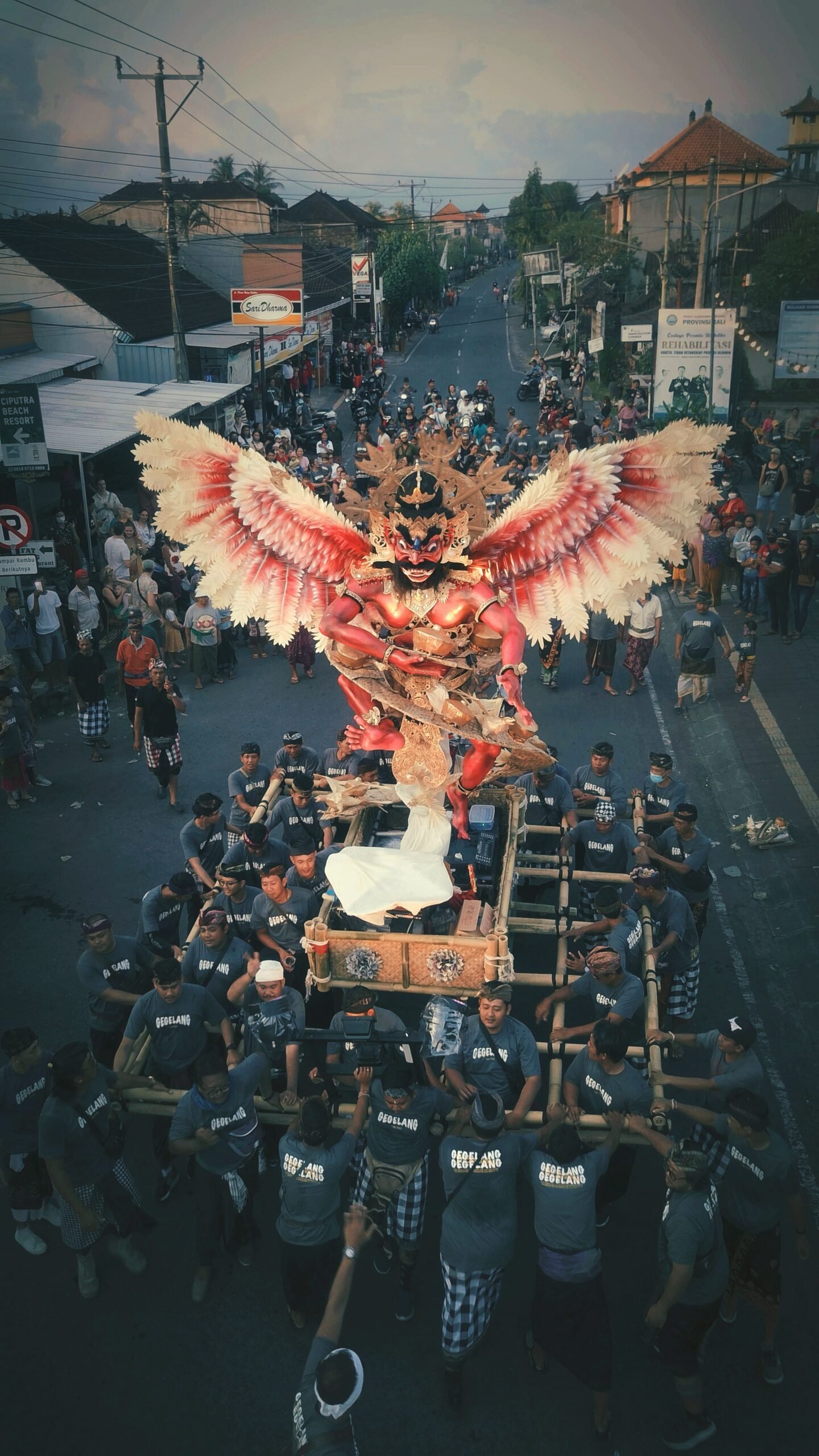
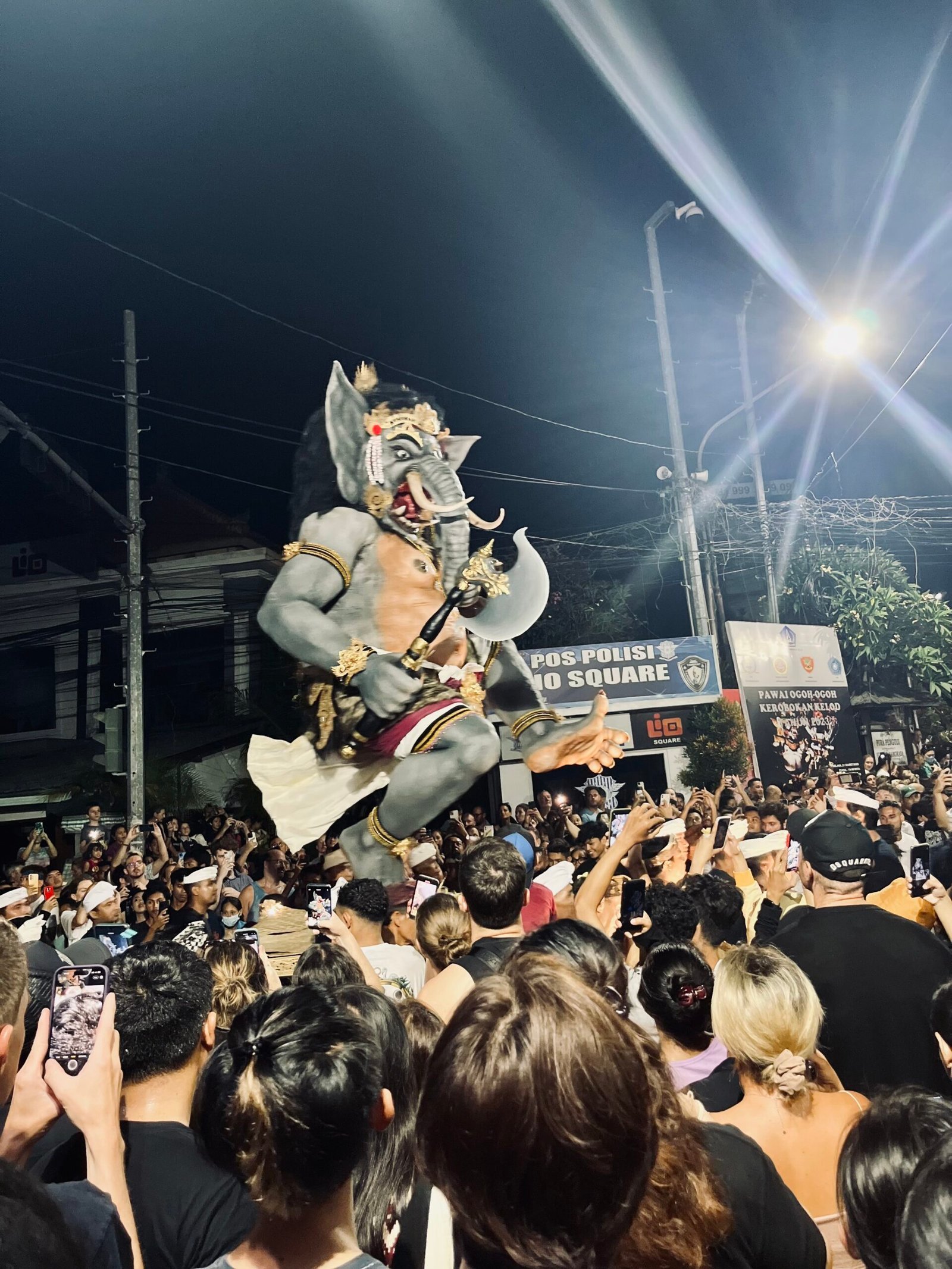
Once a year, the island of Bali comes alive with a festive night of Ogoh-Ogoh parades. 

These colorful yet huge monster-like statues are brought through the streets with the gamelan music, fire torch, and cheers from the crowd.

But, the parade is more than just a fun festival. It represents negative energy that needs to be purified before the day of Nyepi. 

So, why Balinese people create such statues and how did this tradition start? Let’s dive right in to find out about the story behind this unique tradition!

What Exactly is an Ogoh-Ogoh?

Some of you might wonder why the giant statues are being paraded through the streets of Bali and what its significance is.

Basically, the purpose of Ogoh-Ogoh Bali creation is a part of Balinese Silence Day celebrations. It is often depicted as demon creatures which represent evil and negative spirits. 

On the night before Nyepi or known as Pengrupukan, the statues are being paraded through the streets by Banjar or traditional Balinese community organizations. 

At the end of the parade, the statues are being burned symbolizing spiritual cleansing or removal of bad energy. It is a very sacred ritual for Hindus in Bali and over time, it has become an important cultural expression.

The Origins: History of Ogoh-Ogoh

There are numerous versions of the history about this tradition, but compared to other Balinese rituals, the parade of these giant statues is quite recent and only became popular in the 1980s.

Before that, Balinese Hindu already had rituals to beat off negative spirits, but did not include large monster-like statues. 

If history says so, then why there is Ogoh-Ogoh in Bali?

The idea of parading the statues only started as a creative way to represent the negative force of nature and universe or Bhuta Kala. 

Balinese people believed that creating such frightening figures, parading, and eventually burning them can remove bad energy before the sacred day of Nyepi. Over time, the tradition grew and now every Banjar in Bali is taking part in the making process. 

The statue’s name itself is derived from Balinese word “ogah-ogah” which implies something is shaken. This name is a reason why the statues are always being shaken when carried around the streets.

The statues movement is also influenced by its stance. As technology has advanced, many of the statues can now be moved with the help of modern and latest tools.

Interestingly, many of the figures are not only from Hindu mythology, but also use modern themes, including social issues and environmental concerns. 

Despite the adaptation, the meaning of the tradition will remain the same.

How Ogoh-Ogoh Bali is Made?

Now that you have known about the history, you might also be pondering about how these huge statues are made. 

It is basically a community effort that takes months of preparation. But, generally the process can be explained in a following simple step-by-step:

  • Making the Base Structure

After deciding on the theme and design, now is the time for making the base structure of the statues which is typically built using bamboo and wood. 

It needs to be carefully tied and shaped, creating a strong but lightweight figure for easy carrying during the parade procession. Additionally, the base must also be sturdy enough to make it flexible for movement.

  • Shaping the Body Construction

When the framework is ready, the body is then built and formed using certain materials, like paper mache and cloth that is soaked in glue.

After that, paper, cloth, and resin are used to build the body’s shape to give a lifelike appearance. This is a crucial step for creating facial expressions, detailed muscular structures and wings or tails.

  • Painting and Adding Details

In order to make the statues more colorful, they are decorated and painted in bright colors.

Details like dramatic facial features, claws, and fierce expressions are also added. Ornaments, patterns, and accessories are being applied to elevate the details of the statues. 

Some modern statues are decorated with LED lights to make it more striking visually. Moving gestures like opening mouths, blinking, and rotating heads are also included as special effects controlled by advanced tools.

  • Final Process

Once the statues have finished being decorated and enhanced with details, it will be placed on a bamboo grid. This is to make sure easy carrying and movement for the people during the parade.  

The Parade Procession of Ogoh-Ogoh

The parade starts and is held on the night before Nyepi (Pengrupukan Night). The giant statues are carried through the streets on bamboo platforms by each village community group.

They will parade the handcrafted statues by shaking and spinning to symbolize the battle against the negative spirits. 

This procession is followed by crowd chants, fire torches, gamelan music, and sometimes fireworks. It is totally creating a dramatic and lively atmosphere.

One of the beliefs behind Ogoh-Ogoh loud noises and movement is to remove the bad spirits and energy before the sacred ritual of Nyepi. The statues will be burned at the end of the parade and symbolize an act of purification.

As a final procession, the burning phase is marking the transition from chaos to silence. 

Can Tourists Watch the Parade?

Certainly! Tourists are welcome to watch the parade of these Balinese statues. You can also take photos and videos of the parade, but remember to respect local rules by following certain guidelines from the community.

As the streets can be too packed during the procession, it is better for you to arrive early for the best viewing spot. 

Popular and best spots to see the parade include Ubud, Denpasar, and Kuta. But, the event also takes place in all main towns and banjar across the island.

Come to See the Lively Parade and Enjoy the Peaceful Atmosphere of Nyepi Day!

Ogoh-Ogoh parade is a unique Balinese tradition that is more than just a cultural event. It is a part of spiritual tradition that washes away negativity. 

After the parade ends, the whole island of Bali will enter the tranquility moment of Nyepi Day. This is a wonderful opportunity to step away from the noise of everyday life.

Make this special occasion by retreating into 3 Days Rejuvenation in Nature and Immersive Experience. Enjoy and embrace the peaceful atmosphere of Bali like never before.

Experience The Silence: Spending Nyepi Day In Bali

Imagine being able to spend time in a peaceful stillness. Time seems to slow down and the noises of daily life pauses entirely.

This is what actually happens when you visit Bali during Nyepi Day. On this day, the island especially comes to a profound silence for reflection and rejuvenation.

Experiencing the silence in this Island of Gods offers a unique opportunity to learn and connect with the spirit and magic of Balinese culture. 

So, if you aim to travel there during the celebration, this handful guide is for you.

Balinese Silence Day: What it Means

Silence Day is a spiritual and sacred celebration marking the new beginning of Balinese New Year. Based on the Saka Calendar, this year’s celebration falls on March 29th, 2025. 

It is a day of complete silence and meditation, dedicated to spiritual cleansing, self-reflection, and preserving balance with nature. Unlike most New Year celebrations, it is characterized by a total shutdown of activities on the island. 

Delicate and lively rituals are held the day before, such as Ogoh-Ogoh which paraded through the streets. On the following day, Nyepi Day will start at sunrise or around 6 AM and will last for 24 hours.

During this time, everyone is encouraged to stay indoors and not to engage in loud or noisy activities. No artificial lights and entertainment are also permitted.

It is the best time that allows Balinese people and visitors to focus inwardly and purify themselves for the year ahead.

Why Balinese Celebrate Nyepi Day?

For the Balinese people, this special day holds religious and cultural importances. 

They highly respected the harmony between nature, humans, and gods. So, they seize this moment to briefly pause from daily activities to restore the balance. 

The silence is intended to help them redefine their connection to the natural and spiritual world, introspect on their acts and rebuild their core values.

Not merely for religious purposes, Balinese Silence Day is a noble cultural practice. Families and communities used this special occasion to gather and perform Hindu’s rituals and ceremonies.

While it is a time for individual introspection, it is also time for collective spirituality. The island unites as a whole in a shared moment of silence, where the entire region participates in the sacred rituals.

What You Need to Expect on Nyepi Day?

If you are visiting Bali on the Silence Day, you need to be aware that it is not merely a local holiday. It’s a holy spiritual occasion that highly influences the atmosphere of the entire island.

So, here’s what you can anticipate during the day:

  • Complete Silence Across the Island

Streets are empty and everything on the island is closed. It means that you will not be able to find any businesses, including shops or restaurants open for the day.

If you are used to the lively energy of Bali, this calm setting might be a little bit surprising. That’s why you need to prepare as the silence is not observed only for the locals, but also all tourists.

Tourists are expected to stay inside of their lodging and obey the whole Balinese Silence Day celebration’s rules.

  • Limited Services

Most services, including transportation, are also unavailable. 

But generally, hotels and resorts may remain open with limited services. Some resorts may offer special activities, such as yoga, meditation, and cultural experiences. 

This can be a great chance and ideal option for tourists to spend the day, allowing them to participate in the spiritual aspect.

  • Absence of Noise and Light

Staying during the Nyepi Day in the heart of Bali can be a truly unique experience with its quietest setting. Absence of light, noise, and crowds will give you a rare chance to experience the island without the usual bustle.

For those who are looking for a serene moment of break, this is a perfect choice to take.

  • Pecalang: Local Security on Silence Day

When you plan on staying in Bali for Silence Day, you should also be prepared for Pecalang. Pecalang are traditional officers who are tasked to maintain order and peace, particularly during the Silence Day. 

They are usually wearing a distinctive uniform with traditional headpiece, black and white sarong, and sometimes bring ceremonial tools. 

Pecalang ensures everyone stays indoors and obeys the rules by doing patrol across the streets. They will ensure that no one is going for travel, work, making crowds, and driving vehicles.

Tips for Travelers: How to Experience Nyepi in Bali

To make the most out of a wonderful yet respectful experience, the following tips may be useful for travellers and tourists during the Silence Day. 

  • Stock up Food and Water

As all shops and restaurants will be closed and you won’t be able to go outside, it is important to stock up and prepare your essentials the day before.

These essentials include food, water, and other necessities. It will be better if your accommodation has the arrangements or provided in place for all these supplies.

  • Prepare for Limited Connection

Aside from businesses that are all shutdowns, phone and internet connectivity can also be very limited. If this is a crucial thing for you, then ensure you have everything to make you stay connected before Nyepi Day starts.

But, if you don’t really have the urgency to stay connected, then this time is perfect for taking a break from the buzz of the digital world. You will be able to have more personal free time for self-reflection.

  • Respect Local Culture and Rules

Being mindful of the local culture and rules during this is an essential task. Tourists are expected to obey the rules as it is part of spiritual rituals.

Hotels and resorts you are staying in will likely give instruction on how to spend your day respectfully. They may encourage you to remain in the rooms or designated areas and avoid making noises.

Join Us In Embracing Wellness And Tranquility This Silence Day!

Spending Nyepi Day in Bali can be an unforgettable experience to witness the tradition and spiritual celebration. It’s more than just a day of completely engaging with silence, but it is the perfect time for reflection and getting rest from the exhausting worldly matters.

If you find this as an inviting choice, then take the chance to fully engage in this moment of tranquility. Embrace the peace with 3 Days Immersive Experience and 3 Days Rejuvenation in Nature during the Silence Day. 

It surely will be one of the most meaningful days in your life!   

Meaning & History of Balinese Offerings

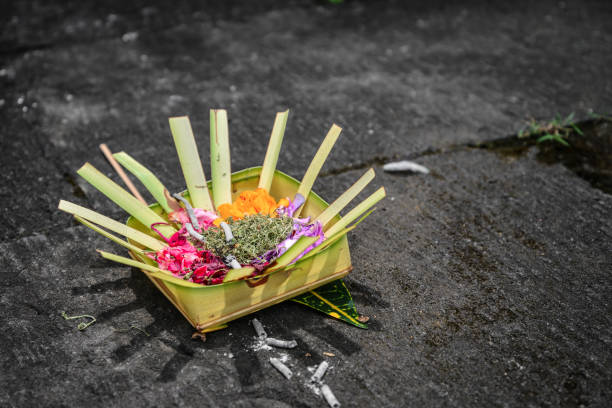
(Traditional balinese offerings to Gods in Bali with flowers and aromatic sticks on stone at garden)

Often known as the Island of the Gods, Bali is a cultural treasure trove as much as a refuge for those looking for beaches and active nightlife. Among the many spiritual traditions that entwine Balinese life, Canang Sari is very important.

If you have visited this island, you have probably seen little, vibrant floral displays set on streets, in temples, or outside residences. In Balinese Hinduism, these exquisite presents are significant representations of thankfulness and loyalty, not just ornamental objects.

But just what is Canang Sari, and why is it so important for Balinese everyday life? From its history to its meaning, let’s explore the core of Canang Sari!

The History of Canang Sari, a Beauty of Balinese Cultural Heritage

Apart from the breathtaking scenery, Bali is mostly loved because of its rich traditions, which have great spiritual resonance through its culture.

One of the most recognizable practices here is Canang Sari. It is a small but valuable offering that is left in houses, temples, and the streets. This daily act is both a sign of loyalty and a beautiful reminder of how people, Gods, and nature all work together. Here’s the detail:

●       What is Canang Sari?

Balinese Hindus make an offering called Canang Sari every day to show their thanks to the Gods. The name comes from the Kawi language, where “Ca” means “beautiful,” “Nang” means “purpose,” and “Sari” means “essence.” As a beautiful statement of love and balance, these words sum up what the gift means.

A Canang Sari is made up of many parts, such as a small tray made from palm leaves, colorful flower pieces, rice, and incense. Each of these parts has a spiritual meaning that shows how they are all linked and in balance.

Some things, like the flowers, are set up in a certain way to honor different Hindu Gods, like Iswara, Brahma, Mahadeva, and Vishnu.

●       Why Do Balinese People Offer Canang Sari?

Learning Canang Sari won’t be complete without exploring its history. Balinese Hindu philosophy, which stresses balance and thanks, is where the practice of giving Canang Sari comes from.

For the Balinese, life is a constant battle between good and evil, happiness and sadness. This gift helps keep the balance.

Balinese people thank the Gods for blessing them with wealth and health by giving Canang Sari. They also try to appease evil spirits to keep peace. Because of this, this is a great way to help our personal growth.

Even until today, this daily practice is still a big part of Balinese faith and culture. Women traditionally take on the responsibility of preparing the offerings, a process known as “metanding”.

What are the Elements of Canang Sari?


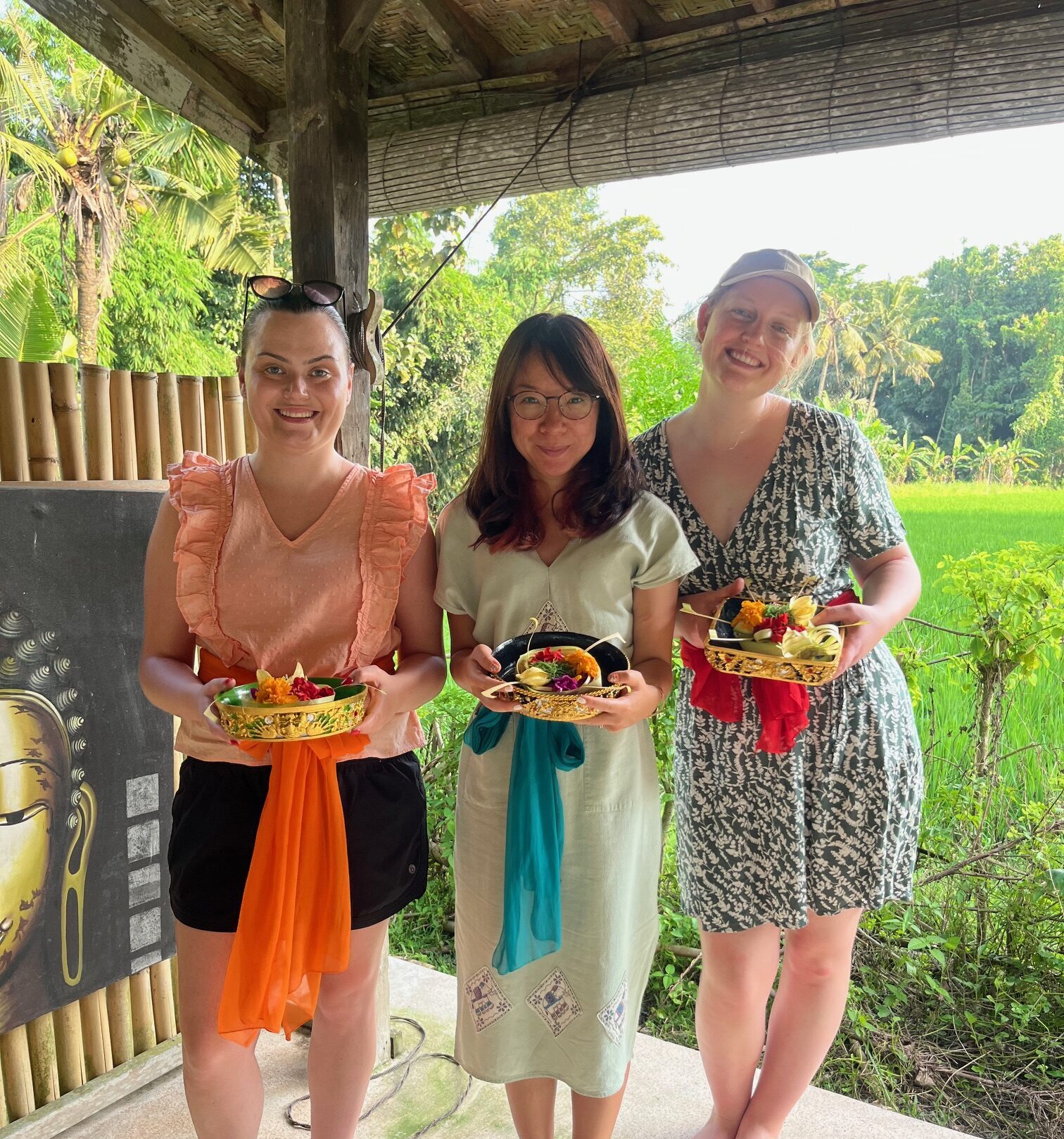
If you want to learn something new, making a Canang Sari can be a memorable activity you might try when you visit this Island of Gods.

From designing the palm-leaf trays to arranging the flowers and sprinkling holy water over the finished gifts, this work calls for great attention to detail. Although some people today buy pre-made Canang Sari, the act of preparing it from scratch is still a cherished ritual.

But in general, everyone can make Canang Sari as long as we know the elements, which consist of:

●       Ceper

The Ceper serves as the base of a Canang Sari. It is made from young palm leaves and shaped into a rectangular tray.

It stands for the Panca Maha Bhuta (the five universal elements) and the Panca Indriya (the five senses), therefore reflecting the physical body. Without this basis, the offering would not be whole, just as the body is the vehicle for life.

●       Porosan

Atop the Ceper you will discover the Porosan, a concoction of betel leaves, lime, and resinous material called gambir.

Porosan reflects the Hindu trinity of Brahma (the creator), Vishnu (the preserver), and Shiva (the destroyer). Encouragement of balance in everyday life and personal growth, it also represents unity in thoughts, words, and deeds.

●       Rice

Rice, known as Wija, is an integral part of Canang Sari. It symbolizes the Ātma, or soul, representing the life force that animates the body. This element reminds us that life is a gift from Ida Sang Hyang Widhi Wasa, the Supreme God.

●       Flower Petals

Flowers are the most eye-catching component of Canang Sari, but their arrangement is not random. Each color represents a specific God and direction, which symbolizes harmony, peace, and sincerity in devotion. As mentioned before, here are the deities:

  • White (East) for Iswara;
  • Red (South) for Brahma;
  • Yellow (West) for Mahadeva;
  • Blue or Green (North) for Vishnu.

●       Kembang Rampai

This is placed on top of the flower arrangement and symbolizes wisdom. Some flowers are fragrant, while others are not—reminding us that life can be both joyful and challenging.

●       Snacks, Sugarcane, and Banana

These items represent the Tedong Ongkara, which symbolizes creation (Upetti), preservation (Stiti), and destruction (Pralinan). All are the forces that maintain balance in the universe.

●       Sampian Uras

The Sampian Uras, or duras, is crafted from palm fronds arranged in a circular shape. It has eight segments that symbolize the wheel of life and the Asta Iswarya (eight characteristics) that guide human life.

●       Lepa

Lepa, or boreh miyik, stands for good behavior and devotion. It reflects how our actions define how others see us and our connection to Ida Sang Hyang Widhi Wasa.

●       Fragrant Oil

Lastly, fragrant oil is added to the offering to stand for self-control and peace of mind. The smell also makes the spiritual environment better, which helps people concentrate during prayers.

The Beautiful Meaning of Canang Sari

Through Canang Sari, the Balinese demonstrate their belief in the interconnectedness of all things. As you can see above, each element represents its own meaning, and learning them can help you to get a deeper reflection on gratitude and harmony. It’s a practice of mindfulness, gratitude, and devotion.

For non-Balinese, participating in this tradition provides a glimpse into the depth of Balinese spirituality. It’s an opportunity to reflect on your own personal growth, embracing the values of gratitude and balance that Canang Sari embodies.

Let’s Explore Something New with One Fit Wellness!

At One Fit Wellness, we offer tailored wellness retreat packages that combine Balinese culture like Canang Sari with learning wellness activities like yoga, meditation, and fitness. Here are the packages you can choose:

Ready to experience the essence of Bali? Explore our retreats at One Fit Wellness and begin your journey with something new now!

Wellness Retreats for a Mindful New Year, Welcoming 2025!

There’s more to the New Year than just a new calendar page. It gives you a chance to feel better in every way. So, how about wellness retreats for a mindful New Year in Ubud, Bali, to start the year 2025? That would be a great way to start the year.

Ubud is known for its peaceful atmosphere and deep cultural roots. It is the perfect place to think about the past year, make new plans, and start a path of renewal. Interested? Let’s explore why a wellness retreat in Ubud should top your list this New Year!

Why Ubud for Your New Year Wellness Retreat?

Located in the lush heart of Bali, Ubud offers a uniquely peaceful atmosphere perfect for starting the New Year with mindfulness and renewal. Unlike the busy beaches of Seminyak or Kuta, this location welcomes calm surroundings that allow guests to connect with nature and themselves.

Ubud is therefore home to some of the most well-known wellness centers in the world because there are so many retreat facilities designed to rejuvenate your mind and body, such as One Fit Wellness.

Wellness Retreats for a Mindful New Year: Why You Need It?

For many tourists to Ubud, New Year’s Eve is an opportunity to begin the year with a renewed emphasis on wellbeing, which helps you reflect on the previous year. If you prefer a calm and mindful celebration, this is the perfect option.

Many individuals want to reflect and improve at the start of a new year. In this case, Ubud wellness resorts are ideal for your self-reflection.

Mindful practices like yoga, meditation, and journaling help you release tension and prepare for the year. Some yoga facilities also offer personalized wellness retreats for a mindful New Year programs that help you concentrate on the present and make meaningful goals.

These techniques are enhanced by Ubud’s beautiful nature, quiet rivers, and peaceful rice terraces. Unlike busy cities or crowded beaches, Ubud provides a tranquil place for reflection and clarity to start the new year.

Wellness Retreat Highlights to Enjoy in Ubud

So, what can we do while enjoying wellness retreats for a mindful New Year in Ubud, Bali? Whether you’re planning a New Year getaway or just a break from your busy life, here are five things that you shouldn’t miss:

●       Reconnect Through Yoga and Meditation

Ubud, as was already said, has a lot of yoga and meditation institutes with sessions ranging in level from beginners to expert practitioners. These courses help you center yourself by combining mindfulness practices with breathing exercises and physical postures.

Imagine beginning your morning with a sunrise yoga session or meditation with a view of Ubud’s greenery. The peace of the surroundings enhances the relaxing effects of the practice, therefore rejuvenating you and preparing you to face life’s challenges.

●       Nourish Your Body with Healthy Meals

Your body deserves as much care as your mind. Many wellness retreats for a mindful New Year in Ubud provide healthy, organic meals to nourish and revitalize you.

There are also some places that specialize in plant-based dining, using fresh, local ingredients to create dishes that are both delicious and packed with nutrients.

Also, dining in Ubud isn’t just about eating—it’s an experience. Imagine yourself enjoying a filling lunch in the middle of nature and surrounded by flowing rivers and bird noises.

Mindful eating helps you to enjoy each bite and appreciate the benefits of a healthy diet. These dinners are a must for your wellbeing as they not only promote physical health but also fit the ideas of balanced living.

●       Try Sound Healing and Balinese Rituals

Ubud is famous for its sound healing ceremonies and traditional Balinese rituals. Sound therapy creates a meditative state and advances emotional healing by use of the vibrations of instruments like chimes, singing bowls, and gongs.

Usually in calm surroundings, these sessions are very restful and help discharge bad energy. For a cultural variation on your healing experience, you may attempt Balinese fire rites and purifying procedures at revered temples like Tirta Empul.

Participants in these age-old ceremonies are directed through symbolic acts of purification and rebirth, including bathing in holy water or lighting candles to let go of past burdens.

●       Sunrise Treks for a Fresh Start

Trekking while enjoying the sunrise is another thing to try for your wellness retreats for a mindful New Year in Bali.

One of the most famous volcanoes in Bali, Mount Batur provides a popular walking path that pays off with amazing views of the dawn across the island. Usually starting early in the morning, guided trips guarantee that you reach the peak in time to see the first light of day.

The walk itself is energizing; the routes swirl over volcanic scenery and forests. At the top, amazing views and the warmth of the rising sun will welcome you; this moment can mark your fresh starts and opportunities in the new year.

For others who like less demanding pursuits, Ubud’s rice terraces—including Tegallalang—also offer similarly breathtaking sunrise views. Walking on these terraces first thing in the morning gives a peaceful way to connect with the surroundings and consider your life goals.

●       Explore Ubud and Bali’s Cultural Beauty

Last but not least, Ubud is a center for cultural discovery in addition to health. You may immerse yourself in Bali’s rich legacy in a variety of ways, from art galleries exhibiting local talent to traditional dance performances at Ubud Palace.

These encounters might give your retreat more depth and enable you to embrace the island’s customs while learning and developing.

Temples with beautiful sculptures and peaceful environments, such as Goa Gajah and Pura Gunung Kawi, can also give you spiritual insights. You may get a greater knowledge of the Balinese people’s spirituality and connection to nature by taking part in a ceremony or just by watching their everyday routines.

From yoga and healthy meals to cultural exploration and natural adventures, every aspect of Ubud invites you to pause, reflect, and grow. So, wellness retreats for a mindful New Year are not just an ordinary getaway, it’s an investment in yourself. This is a chance to give your health first priority, embrace mindfulness, and enter 2025 with fresh energy.

Ready to embrace a fresh start in 2025? Book your wellness retreat package at One Fit Wellness now, and let us guide you toward a more mindful and fulfilling year!

Dive Deep into the Beauty of Bali Culture

Dive Deep into the Beauty of Bali Culture

Bali, often referred to as the “Island of the Gods” or “Dewata Island”, is renowned for its stunning landscapes, from majestic mountains to serene beaches and tranquil lakes. However, what truly sets this island apart is its rich Bali culture.

One of the most enchanting aspects of Balinese heritage is its traditional ceremonies, which are not only spiritually significant but also visually spectacular. If you visit Bali, you have the unique opportunity to witness these ceremonies. Therefore, if you are planning a trip, check out these 7 Balinese traditional ceremonies!

Traveling to Bali? Check Out These 7 Balinese Traditional Ceremonies!

Balinese traditional ceremonies are a window into the island’s soul, showcasing its devotion to preserving cultural practices. Here are seven unique ceremonies that you shouldn’t miss during your visit:

1.     Ngaben Ceremony

Known as the cremation ceremony, Ngaben is a pivotal event for the Hindu Balinese, serving as a way to liberate the soul of the deceased from worldly attachments. The ceremony symbolizes the purification and release of the spirit to return to the Creator.

Typically, Ngaben ceremonies are visually stunning and culturally rich, drawing both locals and tourists alike.

This ceremony is divided into three types: Ngaben Sawa Wedana, Ngaben Asti Wedana, and Swasta. First, Ngaben Sawa Wedana is performed when the body is preserved until the cremation day.

Ngaben Asti Wedana is conducted after the body has been buried and later exhumed for the ceremony. Meanwhile, Swasta is reserved for those who died outside of Bali or whose bodies were never recovered.

The process involves constructing an elaborate cremation tower, intricate offerings, and traditional music and dance. The entire community often participates, highlighting the communal nature of Balinese society.

source ( Wikimedia )


2.     Melasti Ceremony

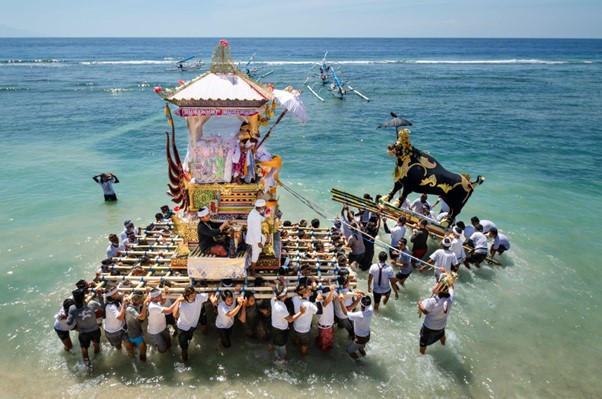
The next list of 7 Balinese traditional ceremonies in this article is Melasti. It is a vital purification ritual in the Balinese Hindu tradition, performed annually as part of the Nyepi festival preparations.

Taking place three to four days before Nyepi, Melasti aims to cleanse the universe of impurities and to purify sacred objects used in temple rituals.

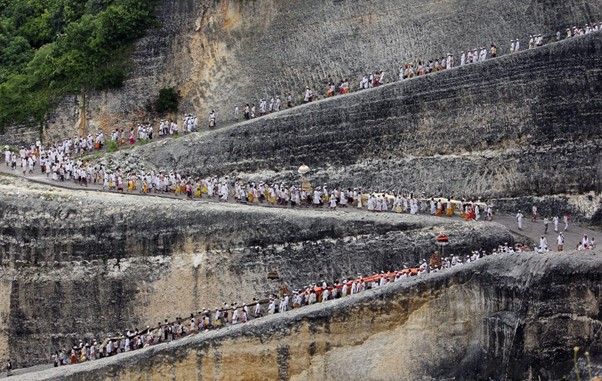
This ceremony is a vibrant and colorful event, often involving entire villages marching to the sea or other water sources, which are considered sacred in Hindu beliefs.

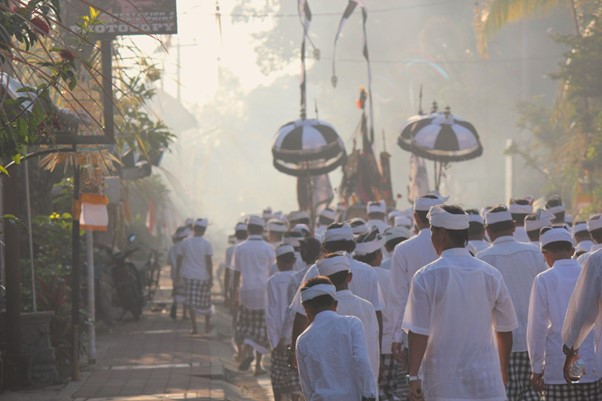
During Melasti, participants dress in traditional white clothing, symbolizing purity, and carry various temple artifacts to the water. The procession is a spectacular sight, with umbrellas, flags, and the sound of gamelan music accompanying the journey.

At the water’s edge, rituals include the symbolic washing of the artifacts and the participants themselves, purifying them both physically and spiritually. Because the water used is believed to be a source of life, it is thought to eliminate negative energies.

Source (Wikimedia)


3.     Mekare-Kare Ceremony

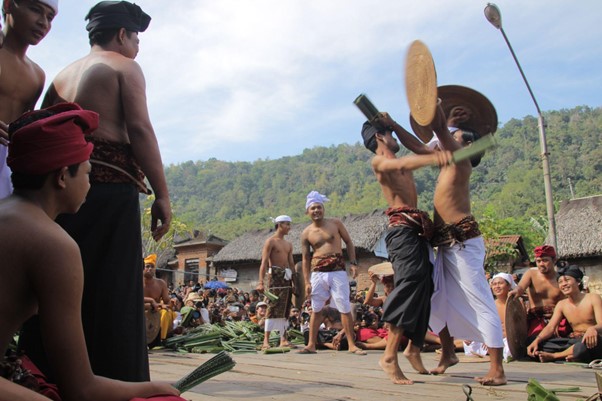
The Mekare-Kare ceremony, also known as the Perang Pandan or Pandan Leaf War, is a unique and thrilling ritual held in the traditional village of Tenganan, East Bali.

This ceremony is dedicated to the Hindu god of war, Indra, and showcases the martial skills and bravery of the village men. The event is not just a physical contest but also a demonstration of spiritual strength and community solidarity.

In Mekare-Kare, male participants engage in mock battles using thorny pandan leaves as weapons and woven rattan shields. Dressed in traditional attire, they face off in a designated arena, surrounded by the cheering villagers.

The goal is not to inflict serious harm but to display courage and honor. After the battles, which are often fierce and result in superficial wounds, participants receive traditional herbal treatments, and prayers are offered for their well-being.

Source (Wikimedia)


4.     Saraswati Day

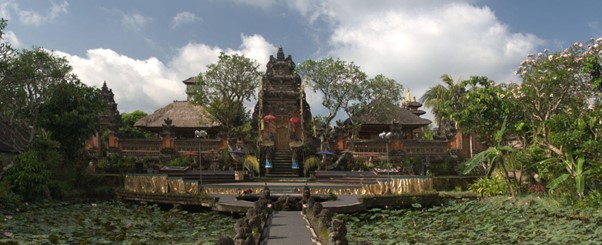
Saraswati Day is a significant religious festival in Bali… For instance, on this day, books and other educational tools are brought to temples, dedicated to honoring Saraswati, the Hindu goddess of knowledge and learning. In Bali, this day is devoted to appreciating and venerating knowledge.

On Saraswati Day, books and other educational tools are brought to temples to be blessed. The day starts early in the morning, with offerings and prayers conducted in schools, homes, and places of learning.

Source (Wikimedia)


5.     Galungan Day

Galungan is one of the most significant religious ceremonies in Bali, celebrated every 210 days in Balinese calendar and lasting for ten days. The name ’Galungan’ originates from the Old Javanese language and means ’Victory’.

True to its name, this Balinese traditional ceremony aims to celebrate the triumph over evil. Additionally, the Galungan ceremony is held to commemorate the creation of the universe and all its contents.

Source (Wikimedia)


6.     Mepandes Ceremony

The Mepandes Ceremony, also known as the tooth-filing ceremony, is a rite of passage for Balinese Hindu teenagers, marking their transition into adulthood.

This ceremony is highly symbolic and is performed to eliminate negative traits like anger, greed, and jealousy. As a result, it is typically carried out when a child reaches puberty, and it involves the ritual filing of the upper canine teeth.

In the Mepandes ceremony, six upper canine teeth of the children who are coming of age are filed down. Also, the teenager undergoing the ritual is dressed in traditional Balinese attire.

Source (Wikimedia)


7.     Tumpek Landep Ceremony

This is a unique and fascinating Balinese ceremony dedicated to honoring weapons and metal tools. Celebrated every 210 days on Saniscara Kliwon Wuku Landep, Tumpek Landep involves offerings and prayers to ensure these objects are blessed.

Originally, Tumpek Landep was focused on traditional weapons, but in modern times, it has extended to include all metal objects, such as cars, motorcycles, and modern weapons like guns and knives.

Source (Wikimedia)

Explore the Beauty of Bali with Wellness Retreats

While immersing yourself in Balinese culture, consider enhancing your experience with a wellness retreat. Bali is renowned for its holistic health and wellness offerings, providing the perfect environment for relaxation, rejuvenation, and spiritual growth.

Our Wellness Retreats at One Fit Wellness Bali include yoga sessions, meditation practices, spa treatments, and healthy, organic meals, all designed to restore balance and harmony to your mind, body, and soul.

We offer a range of retreat packages tailored to meet your needs. Whether you’re seeking a transformative spiritual journey or simply a peaceful escape from the hustle and bustle of everyday life, our retreats provide the perfect setting for personal growth and self-discovery.

So, join us now to experience the magic of Bali while nurturing your well-being. Also, don’t forget to check out the Balinese calendar before planning your trip. Make sure you don’t miss all the ceremonies mentioned above!


Tips and Tools to Maximize Your Health While Traveling

Have you ever felt significant fatigue or mentally exhausted? Those might be signs that you need a long break, such as traveling. However, it is also important to prioritize health during your travels.

The reason is that because of the excitement of exploring new places, it’s easy to overlook the importance of taking care of your body. So, whether you’re embarking on a cross-country adventure or jetting off to a tropical paradise like Bali, it’s essential to always stay healthy.

Tips: How to Maximize Your Health While Traveling

If you’re not careful, traveling can take a toll on your health. There are some useful tips to help you stay healthy and happy throughout your journey.

They are starting from getting to the right mindset (relax and calm down before excitement), avoid alcohol and caffeine, block out noise and light, dress appropriately (no tight clothing), stay hydrated, get up and move around. Below are the details:

1.     Having a Quality Sleep or Nap

It’s no secret that sleep is crucial. Sleep helps the body recharge, repair itself, and sharpen focus. Not only things mentioned, it also ensures you’re energized and ready to seize the day’s adventures during your travels. It is well known that getting 7-9 hours of sleep per night can significantly boost your immune system.

However, many of us don’t get sleep, especially while traveling. Usually, it is due to jet lag. As a solution, before your trip, start gradually adjusting your sleep pattern to match your destination’s time zone.

Bringing along travel essentials like pillows or eye masks can also help create a familiar sleep environment, ensuring you get the rest you need, even on long flights. So you can have a quality sleep or nap.

2.     Getting to the Right Mindset (Relax and Calm Down Before Excitement)

Well, you are right that it’s no secret that sleep is crucial. But, not only sleep, getting the right mindset is an important thing to do.

So, next tips, before you embark on your journey, take a moment to relax and calm your nerves. Traveling can be exhilarating, but it’s essential to manage stress levels for optimal health.

Try to practice mindfulness techniques like deep breathing or meditation to center yourself before the excitement sets in. Maintaining a calm mindset can help your body adjust to new environments more effectively.

3.     Avoid Alcohol and Caffeine

Many of us don’t get sleep, especially while traveling, but alcohol and caffeine. While it might be tempting to indulge in a cocktail or cup of coffee during your travels, it’s best to avoid alcohol and caffeine, especially during long flights.

Both substances can dehydrate your body and disrupt your sleep patterns, leaving you feeling fatigued and jet-lagged. Instead, opt for water or herbal tea to stay hydrated and refreshed throughout your trip.

4.     Block Out Noise and Light

From the first point mentioned above, it is clear that sleep helps the body recharge, repair itself, and sharpen focus. However, sometimes unfamiliar surroundings or different climates in a new country or region can disrupt your sleep quality.

So, how to maximize sleep while traveling? The answer is to block out disruptive noise and light by using earplugs and a sleep mask.

These simple yet effective tools can help you achieve deeper, more restorative sleep, even in an unfamiliar environment.

5.     Dress Appropriately (No Tight Clothing)

Not only think about how to maximize sleep while traveling, you must know that comfort is key when it comes to travel attire. It is highly recommended to avoid tight clothing that restricts movement and circulation, as it can lead to discomfort and even health issues.

Opt for loose, breathable fabrics that allow your skin to breathe and keep you cool during long journeys. Remember, your health and well-being should always take priority, even when it comes to fashion choices.

6.     Stay Hydrated

One of the most crucial aspects of staying healthy while traveling is staying hydrated. Dehydration can lead to higher body temperature, affecting heart rate, blood pressure, energy levels, and even more severe complications like cramps and headaches.

Thus, be sure to drink plenty of water throughout your journey, and avoid sugary or caffeinated beverages that can dehydrate your body. Not only does your body stay hydrated, consuming enough water can keep your mind at ease.

7.     Get Up and Move Around

Sitting for extended periods during travel can increase the risk of blood clots and stiffness. Combat the negative effects of prolonged sitting by getting up and moving regularly.

Try to take short walks around the cabin during flights, stretch your legs at rest stops during road trips, and explore your destination on foot whenever possible. These movements will improve circulation and prevent discomfort.

So, don’t be afraid to stretch your legs and get moving. It’s the key to staying healthy and happy on the journey while keeping your mind at ease.


Tools to Help Maximize Your Health During Traveling

Traveling is an exciting adventure, but it’s essential to prioritize your health along the way. By utilizing various tools and strategies, you can maximize your well-being, mentally connects to inner peace, and ensure a smooth journey. Let’s delve into some key tools to help you stay healthy while traveling.

●       Basic First Aid Kit

A basic first aid kit is a crucial companion for any traveler. It should include essentials such as band-aids, antiseptic wipes, scissors, and pain relievers. These items can come in handy for treating minor injuries or ailments that may arise during your trip.

So, always pack a first aid kit to ensure that you’re prepared for any unexpected health issues and can address them promptly, allowing you to enjoy your travels with peace of mind.

●       Hand Sanitizer and Disinfecting Wipes

It is true that the COVID-19 pandemic has ended, but maintaining good hygiene is still crucial to staying healthy, especially while traveling. Hand sanitizer and disinfecting are must-bring items in crowded or unfamiliar environments.

Look for hand sanitizers with at least 60% alcohol content, as recommended by health experts. Regularly sanitizing your hands and frequently touched surfaces can help prevent the spread of illness and reduce your risk of infections.

●       Balanced Foods

Good foods affect your physical condition, and it also mentally connects to inner peace. So, eating a balanced diet is essential for fueling your body and maintaining optimal health during travels.

Pack nutritious snacks like nuts, dried fruits, or granola bars to keep hunger at bay while on the go. Then, when dining out, opt for wholesome meals with plenty of vegetables, lean proteins, and whole grains.

●       Supplements

Incorporating supplements into your travel routine can provide an extra boost to your immune system and overall well-being. Consult with your healthcare provider before departure to determine which supplements are suitable for you.

Common options include multivitamins, probiotics, and vitamin C, which can help support your immune system. Additionally, consider packing any prescription medications you may need for the duration of your trip.

Traveling should be a rewarding and enjoyable experience, and prioritizing your health can help ensure that you make the most of your adventures. If you need a trip full of recharge, why not consider joining us at One Fit Wellness in Bali?

We have a Wellness Retreats package to help you relax and enjoy new surroundings. You can have a walk, do physical activities, and even try massaging to relieve your jet lag and reduce significant fatigue.

Wellness Tools Selection

Gentle companions to your journey—always explorations, never medical advice.

These tools are designed for curiosity and reflection,offering simple ways to pause,notice, and reconnect. They are not diagnostic or therapeutic tools.

4-7-8 Breathing

A powerful, simple breathing technique renowned for its ability to quickly calm the nervous system. Master the 4-7-8 count to reduce anxiety, combat stress, and prepare your body for a deep, restful sleep.

Box Breathing

Also known as square breathing, this technique is a cornerstone of mindfulness for achieving balance and focus. Its simple four-step rhythm helps regulate breath, reduce anxiety, and sharpen mental clarity.

Alternate Nostril Breathing

A traditional yogic practice to harmonize the body's energy channels. Alternate Nostril Breathing is excellent for reducing stress, calming the mind, and balancing the left and right hemispheres of the brain for improved focus.

Diaphragmatic Breathing

Learn to breathe from your belly with this foundational technique. Diaphragmatic breathing strengthens the diaphragm, significantly reduces stress, and improves oxygen exchange for better lung health and relaxation.

Lion’s Breath

A cathartic practice that powerfully releases facial and chest tension. Lion's Breath is an excellent way to relieve stress, shake off inhibitions, and experience an immediate sense of calm and energetic release.

Panic Attack

A cathartic practice that powerfully releases facial and chest tension. Lion's Breath is an excellent way to relieve stress, shake off inhibitions, and experience an immediate sense of calm and energetic release.

Preparing your breathing exercise...

Enquiry